

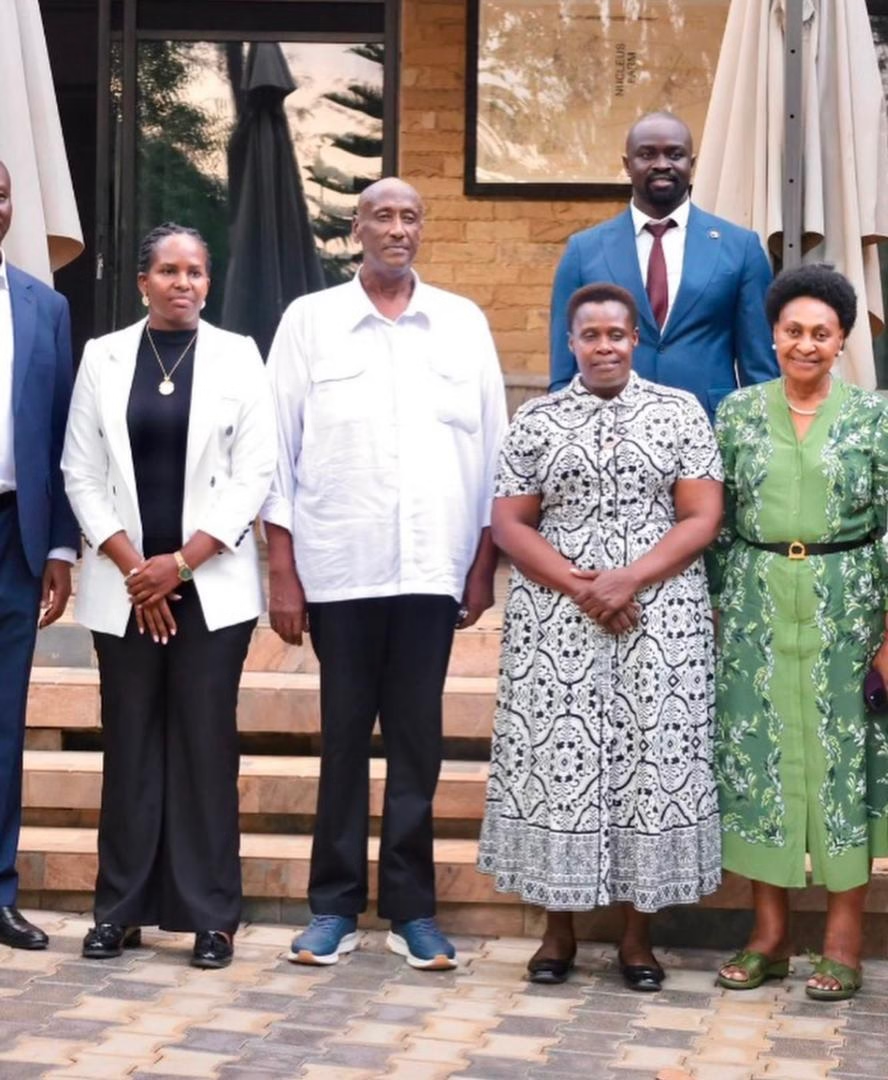
Senior government leaders have called for a new push to transform Teso sub-region through investment, agribusiness, and value addition, drawing lessons from successful economic models in other parts of Uganda.
The commitment was made during a meeting held at Heritage Nucleus Model Farm in Kapeeka. The meeting brought together H.E. Vice President Jessica Alupo, Hon. Hajjat Aminah Mukalazi, Gen. Caleb Akandwanaho Salim Saleh, Hon. Desire Muhoza, Hon. Jacqueline Mbabazi, and Hon. Dr. Ongalo C. Obote to discuss strategies for wealth creation in Teso.
Discussions centered on how to replicate development models that have delivered results elsewhere and adapt them to Teso’s agricultural and economic strengths.
Gen. Salim Saleh, who heads the Operation Wealth Creation initiative, cited Greater Luwero as an example of what is possible. He highlighted the region’s 200+ industries and 50+ petrol stations as evidence of a thriving “money field” — an ecosystem where agriculture, manufacturing, and services reinforce each other to grow household incomes and create jobs.
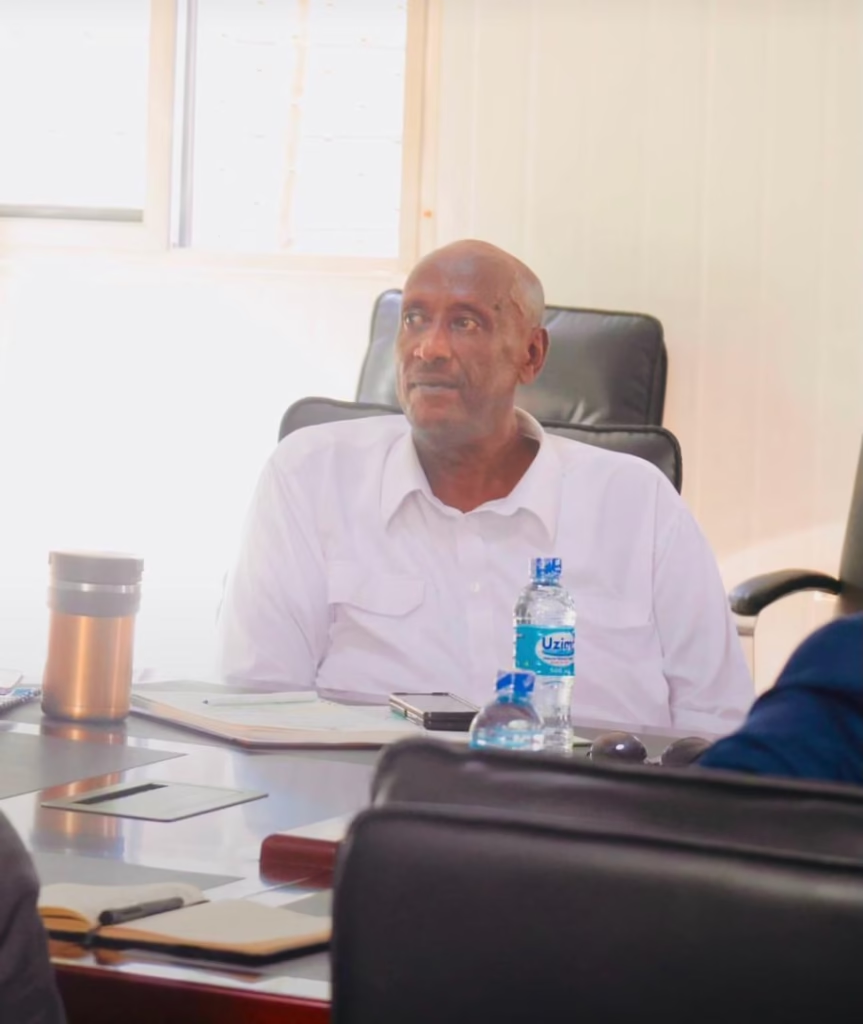
“Where there is value addition and private sector investment, money circulates and communities prosper,” Gen. Saleh noted.
Hon. Aminah Mukalazi pledged government support to strengthen investment and agricultural value chains in Teso. Key areas of focus include post-harvest handling, agro-processing, market linkages, and financing for farmers transitioning from subsistence to commercial agriculture.
Teso, known for crops such as millet, cassava, sorghum, and livestock, is seen as having strong potential for agro-industrial development. Leaders emphasized that unlocking that potential will require better infrastructure, technical support, and partnerships with the private sector.
Held at Heritage Nucleus Model Farm — a demonstration center for modern farming and agribusiness — the engagement is expected to shape upcoming government programs aimed at boosting incomes and creating employment in Eastern Uganda.
The meeting signals a renewed push to decentralize wealth creation efforts and tailor them to regional needs, with a focus on moving beyond raw production to building industries around what farmers already grow.