


Pastor Solomon Mwesigye of Good News Church and Chief Executive Officer of KSTV Uganda has reportedly been arrested in connection with an alleged Shs2.9 billion gold fraud involving American investors and a gold-related business operating in Uganda’s mineral-rich Karamoja sub-region.
Mwesigye was reportedly arrested on October as police and anti-corruption authorities investigated allegations surrounding the transaction, including how the investment funds were obtained, how they were used and the role of individuals connected to the deal.
According to information circulating about the case, the pastor acknowledged knowing American investors George Mitchell Lepak and Dylan Robert Bluma during questioning. He reportedly explained that the funds were used to establish Ukuri Aperture Science Innovation Ltd, a company operating in Karamoja.
However, the precise circumstances surrounding the investment, the alleged loss of Shs2.9 billion and Mwesigye’s role in the transaction remain matters for investigators to establish.
The case has renewed concerns about gold-related fraud in Uganda, where the growth of legitimate mineral trading has also created opportunities for individuals and criminal networks accused of exploiting foreign investors.
The allegations place Mwesigye at the centre of a transaction involving a substantial amount of money and investors from the United States.
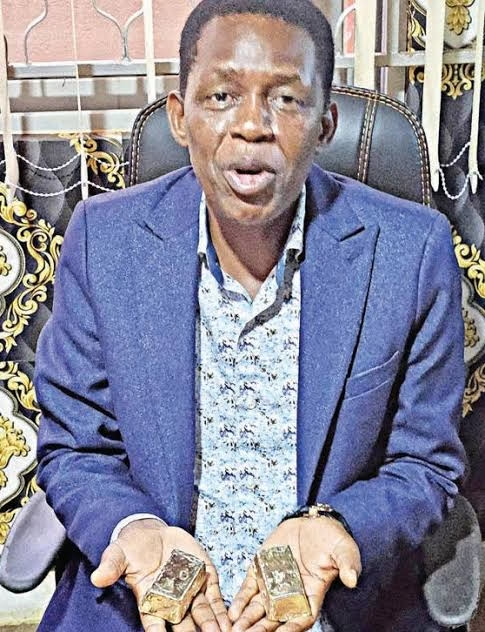
Investigators are expected to establish the nature of the agreement between the parties, the representations made to the investors and whether the funds were used for the purposes for which they were provided.
The circumstances surrounding the establishment and operations of Ukuri Aperture Science Innovation Ltd are also relevant to understanding the transaction.
At this stage, the reported arrest should not be treated as proof of guilt. Any allegations against the pastor must be supported by evidence and tested through the appropriate legal process.
Nevertheless, the case raises questions about the importance of due diligence when investors enter high-value mineral transactions, particularly in markets where buyers may depend on intermediaries to establish the credibility of local business partners.
Trust can play a significant role in such arrangements. Investors may be influenced by a person’s public standing, professional connections, religious position or claims of access to established business networks.
Where such trust is exploited, the financial consequences can be substantial.
The reported Shs2.9 billion case comes amid wider concerns about fraudulent gold transactions targeting foreign investors in Uganda and other parts of East Africa.
Gold-related scams often involve claims that large quantities of gold are available for purchase at attractive prices. Prospective buyers may be shown samples, presented with documents or introduced to intermediaries who claim to have access to licensed dealers, refineries or export arrangements.
In some cases, investors are allegedly persuaded to transfer money before the gold’s authenticity, ownership, quantity or export eligibility has been independently verified.
Once the money has been transferred, victims may discover that the gold does not exist in the promised quantity, that samples were misrepresented or that the transaction was based on false documentation.
An analysis by the Global Initiative Against Transnational Organized Crime has highlighted the scale of fake-gold scams across East Africa, with Kampala and Nairobi identified as important locations in schemes targeting foreign buyers.
The cross-border nature of these operations can complicate investigations, particularly when investors, intermediaries, companies and financial transactions are spread across different jurisdictions.
Ugandan authorities have previously announced investigations and operations involving suspected gold fraud.
In August 2025, the State House Investors Protection Unit held discussions with senior government officials over fraud in the gold trade. Energy Ministry Permanent Secretary Irene Batebe reportedly warned that investors had fallen victim to fraudulent gold transactions.
Police also reported in August 2025 that Shs900 million had been recovered in connection with investigations involving 56 people accused of scamming gold investors over a seven-month period.
In April 2026, businessman Muhammad Ali was reportedly remanded in connection with an alleged Shs13 billion gold scam targeting foreign investors. The case involved the State House Anti-Corruption Unit, the Criminal Investigations Directorate and the Office of the Director of Public Prosecutions.
In August 2026, police announced the arrest of 16 suspects, including four police officers, over an alleged $4 million fake-gold fraud scheme. Authorities reportedly recovered suspected fake gold, documents and vehicles believed to have been used in the operation.
The cases illustrate the continuing challenge facing law-enforcement agencies as they attempt to distinguish legitimate mineral transactions from schemes designed to defraud buyers.
However, allegations and arrests in separate cases do not, on their own, establish that the suspects were involved in a single network or that every disputed gold transaction is fraudulent.
Uganda’s gold trade has attracted investors from different parts of the world, but foreign buyers can face particular challenges when attempting to verify local dealers and transactions.
Investors unfamiliar with the country’s regulatory environment may struggle to establish whether a supplier is legitimate, whether a refinery is authorised to conduct the relevant operations or whether the gold being offered meets the stated specifications.
Fraudsters can allegedly exploit these gaps by presenting documents that appear official, arranging meetings with supposed business associates or claiming access to influential contacts.
In complex transactions, victims may also be encouraged to make additional payments for processing, security, transportation, export permits or other purported requirements.
Such schemes can develop over an extended period, with relationships built before substantial sums of money are requested.
The reported case involving Mwesigye and the American investors will therefore require investigators to examine not only the movement of funds but also the communications, agreements and business arrangements that preceded the alleged loss.
Uganda’s expanding gold trade has strengthened its position as a regional trading and export hub.
According to Bank of Uganda data reported by Reuters, the country’s gold exports rose from approximately $201 million in 2022 to $2.3 billion in 2023.
The growth has increased the importance of effective oversight, traceability and verification across the mineral supply chain.
At the same time, repeated reports of gold fraud risk damaging the country’s reputation among legitimate international investors. Businesses considering entry into the market may become more cautious if they believe transactions cannot be adequately verified or that disputes will be difficult to resolve.
Addressing the problem requires more than arresting suspects after money has allegedly been lost. It also calls for effective licensing and supervision, independent gold testing, transparent ownership records, reliable export documentation and stronger monitoring of suspicious financial transactions.
Cooperation between police, financial investigators, mineral-sector regulators and international law-enforcement agencies is particularly important where alleged victims or suspects are based outside Uganda.
The central issue in the Mwesigye case is whether the Shs2.9 billion investment was handled in accordance with the agreement between the parties and whether evidence supports allegations of fraud.
Investigators will need to establish how the investment was negotiated, what the American investors were promised, where the funds were transferred and how the money was ultimately spent.
They will also need to determine the company’s actual business activities and whether the transaction involved a genuine gold-related investment or representations that misled the investors.
The answers could help clarify whether the dispute arose from a failed business arrangement, alleged deception or other conduct requiring criminal investigation.
For the investors, the immediate concerns are likely to include establishing what happened to their money, identifying those responsible if wrongdoing is proved and determining whether any funds can be recovered.
For Uganda, the case adds to the pressure on authorities to demonstrate that the country’s mineral trade can support legitimate investment while protecting buyers from fraud.
As investigations continue, the reported arrest of Pastor Mwesigye remains one part of a wider question confronting the sector: how can Uganda preserve the economic opportunities created by its gold trade while preventing fraudulent operators from exploiting the confidence of foreign investors?
The outcome will depend on the evidence investigators establish, the findings of any subsequent court proceedings and the measures authorities take to strengthen safeguards across the industry.