
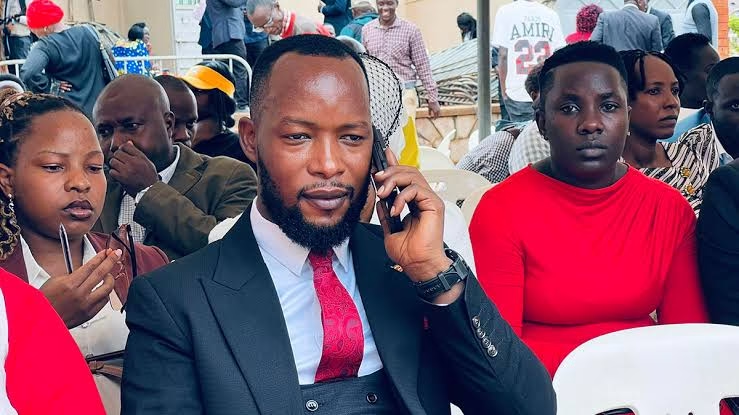
Businessman and social commentator Abraham Luzzi has sparked debate after claiming that he was ignored at Kibuli Mosque in Kampala because of his support for President Yoweri Museveni and the ruling National Resistance Movement (NRM).
Luzzi, a former aspirant for the Kampala Central parliamentary seat, reportedly raised concerns about what he described as an unwelcome reception at the prominent Muslim place of worship, alleging that his political affiliation may have influenced how he was treated.
His claims have reignited debate about the relationship between religion and politics in Uganda, particularly whether political differences are increasingly affecting interactions within religious institutions.
The businessman also questioned whether Kibuli Mosque was becoming more politically aligned with the opposition National Unity Platform (NUP), suggesting that supporters of the ruling party could face a different reception because of their political views.
However, these allegations have not been independently verified, and it remains unclear whether the incident occurred as described or whether political differences played any role in the alleged treatment.
The claims have attracted mixed reactions, with some commentators questioning the influence of political affiliations within religious communities, while others have cautioned against drawing conclusions about an entire religious institution based on an individual’s account.
The debate also raises broader questions about the role of mosques and other religious institutions in a politically divided society. Religious leaders are often expected to provide spaces where believers can worship freely, regardless of their political affiliations.
Uganda’s political environment has frequently seen religion, public leadership and party politics intersect, making the neutrality of religious institutions an important subject of public discussion.
Kibuli Mosque is one of the country’s prominent Muslim religious centres, serving worshippers from different backgrounds and communities. Whether Luzzi’s experience reflects a broader concern or an isolated incident remains unclear.
The allegations could not be independently confirmed at the time of publication, and no response from the mosque’s leadership was included in the available account.
As debate continues, the incident highlights the importance of maintaining places of worship as inclusive spaces where religious participation is not determined by political allegiance.