
By Sir Dean Lubowa Saava
TV10 Feature Story Desk
Agriculture, Wealth Creation and Economic Transformation
Uganda’s coffee industry is entering a defining conversation about ownership, value addition, generational transition and the true beneficiaries of the country’s agricultural wealth. At the centre of this debate is General Salim Saleh, whose coffee-sector interventions have been associated with efforts to organize farmers, strengthen production and increase the value Uganda earns from one of its most important cash crops.
The handover of coffee responsibilities and opportunities to a new generation presents a bigger question than who takes over the industry: Can Uganda transform coffee from a crop that sustains millions of households into a national economic asset whose benefits are felt by the farmers who produce it?
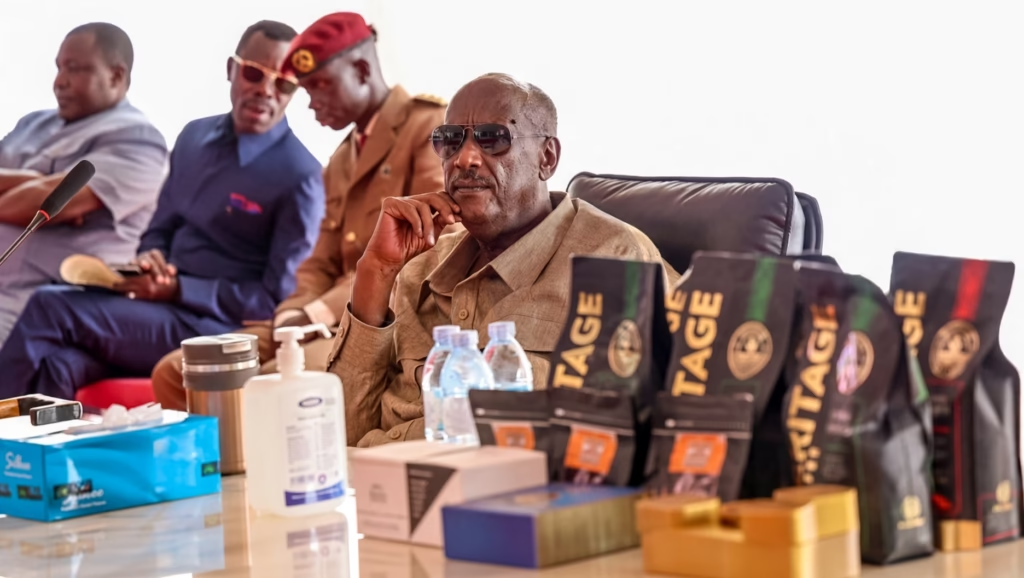
The debate has also taken a political turn following Saleh’s reported challenge to King Saha over his song “Akamwanyi” a song alleging that Uganda’s coffee was stolen. The disagreement raises a question that deserves more than political exchanges and musical controversy: what happens to Uganda’s coffee between the garden, the buyer, the exporter and the international market?
The answer lies in understanding the economics of coffee, the role of the Uganda Coffee Development Authority, the financing available to growers, and the extent to which farmers participate in the value created by their labour.
The Uganda Coffee Growers Fund: Who Will Benefit When the Coffee Economy Changes Hands?
The launch of the Uganda Coffee Group at Kapeeka Industrial Park on October 13, 2026, provides a new focal point for debate over the future of Uganda’s coffee industry. The initiative is intended to bring together stakeholders, attract investment and expand value addition along the coffee value chain.
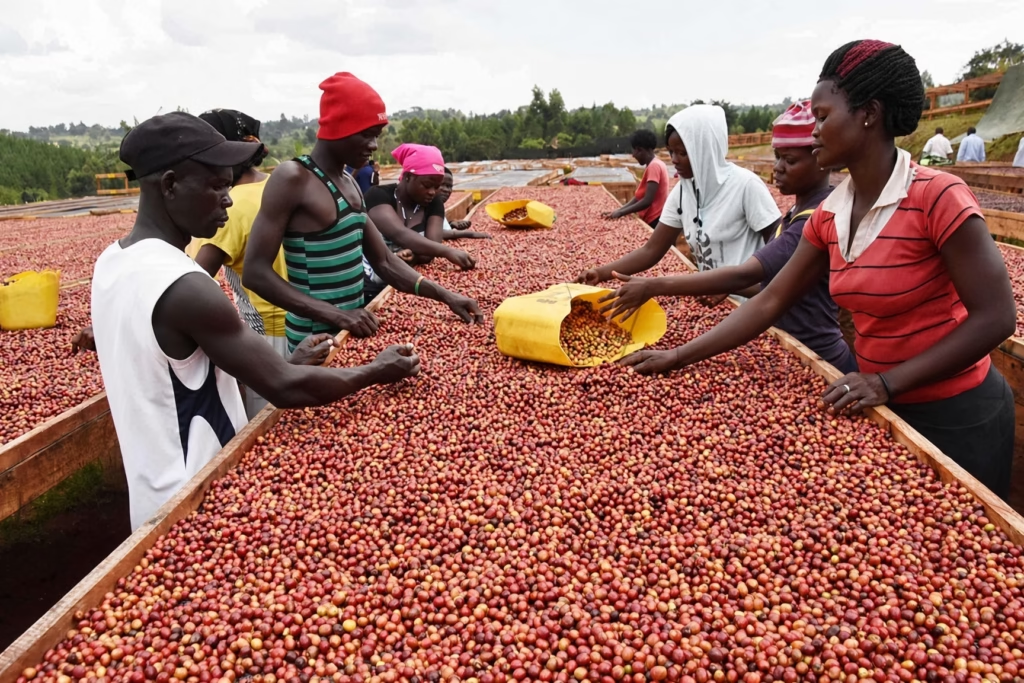
But beyond the launch, the bigger story is the proposed financing architecture and whether it can change the economic position of ordinary coffee growers.
Farmers, Investors and Partners
This is an ambitious long-term framework, but its ultimate impact will depend on how the money is mobilized, who qualifies for support, what conditions apply and how benefits reach farming households.
The distinction matters. A fund announced on paper is not the same as money disbursed to farmers. An industrial park is not the same as a thriving farming household. And increasing export earnings does not automatically mean that the person growing the coffee receives a better price.
For TV10, the central investigative question is therefore straightforward: Will the coffee financing initiative put capital into the hands of growers, or will farmers remain suppliers of raw materials to a more profitable industrial and export economy?
1. General Saleh and the generational handover
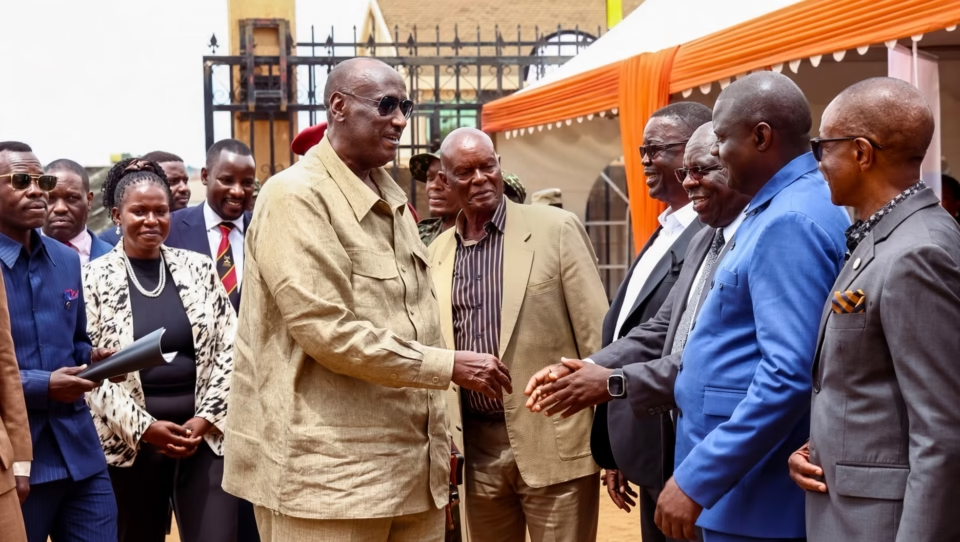
General (Rtd) Salim Saleh, who heads Operation Wealth Creation, has long been associated with efforts to move Ugandan farmers from subsistence production towards commercial agriculture. The Uganda Coffee Group initiative now puts renewed attention on his vision for organizing investment and production around coffee.
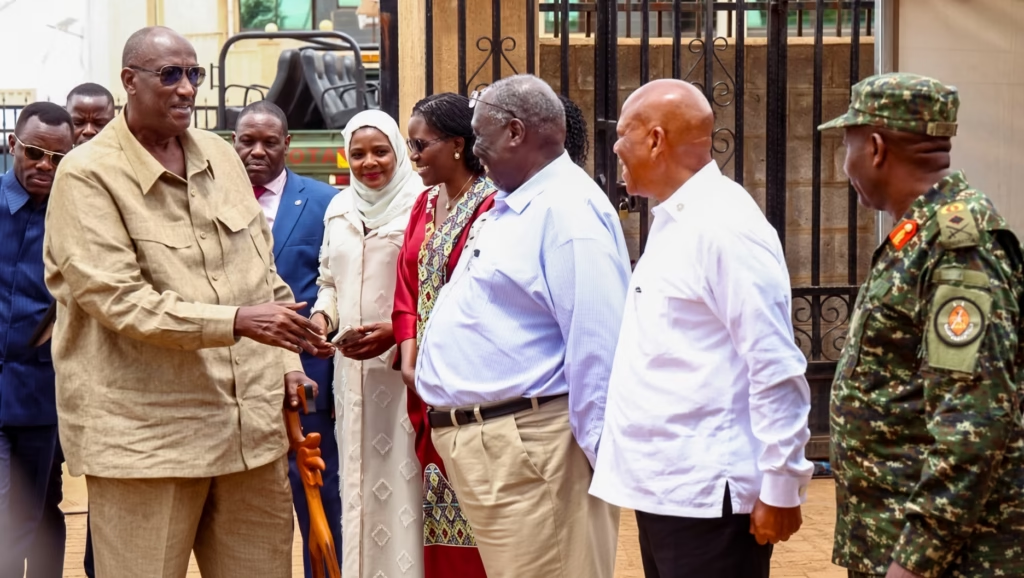
His challenge to King Saha over Akamwanyi brought that vision into the public arena… At the Kapeeka launch, Saleh disputed the song’s suggestion that Uganda’s coffee had been stolen, declaring that the coffee was back and encouraging Ugandans to support the new initiative.
The exchange was memorable, but the real test of Saleh’s message will not be whether a song wins or loses an argument. It will be whether the next generation inherits a functioning coffee economy that can create jobs, finance farms, support processing and retain more of the crop’s value inside Uganda.
A successful handover should mean more than transferring responsibility to younger entrepreneurs. It should involve transferring access to capital, technology, markets, industrial capacity and the skills needed to compete internationally.
The next generation must be able to do more than grow coffee. It must be able to finance it, process it, brand it, trade it and build businesses around it.
2. The coffee fund: the promise and the questions
The proposed Uganda Coffee Fund could become an important instrument for financing the sector. Its published structure identifies several possible financing channels, including loans, equity investment, guarantees and coffee bonds.
Farmers, Investors and Partners. Each instrument can serve a different purpose.
Loans could provide working capital for farmers, cooperatives, processors and exporters, subject to eligibility and repayment conditions.
Equity investment could help finance businesses that process, package or export Ugandan coffee.
Guarantees could reduce some of the risks that prevent lenders from financing agricultural enterprises.
Coffee bonds could offer a mechanism for mobilizing investment, depending on their final design, terms and safeguards.
Impact capital could support projects intended to generate measurable economic and social benefits alongside financial returns.
These are potential functions of the proposed financing model, not confirmation that every facility is already operating or that farmers have received money through it.
The critical question is whether the fund will be designed around the financial realities of smallholder growers. Many farmers need money before the harvest to purchase inputs, maintain plantations, hire labour and manage weather-related risks. If financing becomes available only after production, it may miss the period when it is most needed.
A credible fund should disclose its capitalisation, governance, eligibility rules, interest rates where applicable, repayment terms, disbursement figures and independent audit arrangements.
It should also explain whether support will reach individual farmers directly, through cooperatives, through commercial lenders or through selected agribusinesses.
Without that transparency, the public may know that a fund exists without knowing who it actually serves.
3. The unanswered question: who owns the value of coffee?
Uganda’s coffee story is often told through production volumes and export earnings. Yet the distribution of income across the value chain deserves equal attention.
Consider the journey of a coffee bean:
Stage 1: The farmer
Provides the land, labour, seedlings and daily care required to produce the crop. The farmer’s earnings depend on yield, quality, market prices and bargaining power.
Stage 2: Collection and processing
Coffee is collected, sorted, dried, hulled or otherwise processed. Better equipment and quality control can help producers meet higher-value market requirements.
Stage 3: Value addition
Roasting, packaging, branding and manufacturing can create additional business opportunities and skilled employment inside Uganda.
Stage 4: Domestic and international markets
Traders, exporters, distributors and retailers connect coffee to buyers. Their costs, margins and commercial risks influence the final distribution of income.
The challenge is not to assume that every intermediary is exploiting farmers. Collection, processing, transportation, financing and exporting all involve real costs and risks.
The challenge is to establish whether growers receive a fair and sustainable share of the value generated by the entire chain.
If the fund finances factories and export businesses but leaves farmers without affordable working capital, stronger bargaining power or reliable markets, the economy could become more industrialised without becoming sufficiently inclusive.
Conversely, linking financing to farmer cooperatives, quality improvement, transparent purchasing arrangements and local processing could allow more households to participate in the growth of the sector.
4. From exporting beans to building a coffee industry
The next phase of Uganda’s coffee economy should be measured not only by how much coffee leaves the country but also by what Uganda produces before it leaves.
That means investing in processing capacity, roasting, packaging, product development, storage, logistics and the technical skills required to serve different markets.
Local value addition can create opportunities for manufacturers, transporters, packaging companies, technicians, marketers and young entrepreneurs. It can also strengthen demand for locally produced coffee.

However, value addition is not automatically profitable. New factories need dependable supplies, electricity, finance, quality standards, skilled workers and access to customers. The coffee fund will need to support commercially viable businesses rather than simply finance impressive infrastructure.
Uganda has already seen examples of efforts to strengthen the connection between growers and processors. In June 2026, the Common Fund for Commodities reported financing arrangements for Just Know Your Coffee Cup, a Ugandan coffee business sourcing from smallholder farmers and working with farmer organisations.
Common Fund for Commodities
Such models illustrate the importance of connecting agricultural production to finance, technical support and markets. The wider question is how to expand these benefits beyond individual companies and farmer networks.
5. The accountability test: lessons from past coffee controversies
Any new financing initiative must also recognise that Uganda’s coffee sector has previously faced scrutiny over the management of public resources.
That historical episode does not establish wrongdoing by the new Uganda Coffee Group or its proposed fund. It does, however, underline why public confidence requires strong financial controls and clear accountability.
The new initiative should publish who provides the money, who makes investment decisions, which institutions receive funding, what outcomes are expected and how results will be independently verified.
Where public resources or public guarantees are involved, the applicable oversight and disclosure requirements should be clear. Where private capital is involved, investors and beneficiaries should still understand the governance arrangements and the risks they are accepting.
The public should not have to wait for controversy before learning how a fund operates.
6. What the next generation should demand
If General Saleh is handing the baton to a new generation, the measure of success should be the strength of the institutions and businesses that remain after the launch speeches are over.
The next generation of coffee entrepreneurs should be able to answer six questions:
How much capital has actually been committed to the fund, and how much has been disbursed?
What proportion of financing will reach smallholder growers and their cooperatives?
Will farmers have access to affordable credit, quality seedlings, extension services and appropriate agricultural insurance?
What safeguards will ensure transparent purchasing and fair, understandable pricing?
How much coffee will be processed, roasted, packaged and branded in Uganda, and how many sustainable jobs will this create?
How will the fund report its results, losses, repayment performance and benefits to farming households?
These are not questions against the initiative. They are the questions that could help turn its ambitions into measurable economic outcomes.
Conclusion: Is Uganda’s coffee really back?
General Saleh’s exchange with King Saha has given Uganda’s coffee industry a memorable public moment. Yet the deeper argument cannot be settled by challenging a musician’s lyrics or announcing a new investment framework.
It must be settled in the coffee gardens of Masaka, the farms of the Rwenzori region, the growing areas of eastern Uganda and the many other communities whose livelihoods depend on the crop.
It must be settled in the accounts of cooperatives, the operations of processing plants, the contracts signed with exporters and the incomes earned by farmers.
And it must be settled by whether young Ugandans can build sustainable businesses around a crop that has supported generations before them.
The proposed Uganda Coffee Fund offers a framework for mobilising capital, while the Uganda Coffee Group presents an opportunity to coordinate investment and value addition.
Farmers, Investors and Partners
Whether those ambitions translate into better livelihoods will depend on implementation, access and accountability.
King Saha may have asked through music what happened to Uganda’s coffee. General Saleh has answered that the coffee is back. Now the country must ask the next question: back for whom, under whose control, and with how much wealth returning to the people who grow it?
That is the real test of Uganda’s coffee transition — and the legacy the next generation must inherit.
Editorial note for TV10: The public information reviewed describes the Uganda Coffee Fund as an investment structure with a long-term financing horizon. Specific claims about the amount of money already disbursed, farmer beneficiaries, fund governance and operational performance should be verified before publication as established facts.