
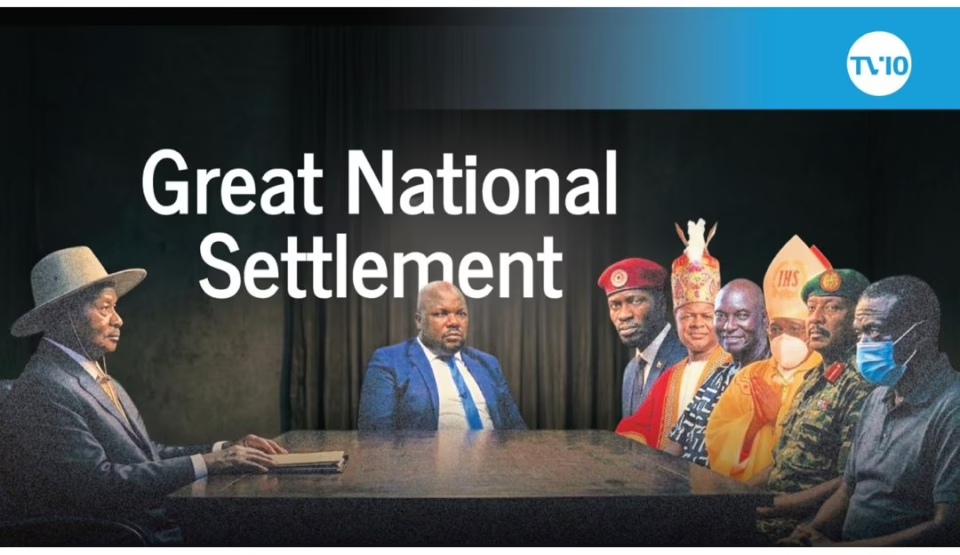
Hon. Mubaraka has called for a “Great National Settlement” to address Uganda’s political disagreements, arguing that the country needs a structured platform where government can engage with individuals and groups with whom it has fallen out.
Mubaraka said the proposed settlement should be based on what he described as a “political quarisation doctrine”, which would allow government and its political opponents to sit together, discuss their differences and search for areas of agreement.
His proposal goes beyond political parties, with Mubaraka suggesting that the process should bring together different sections of Ugandan society to participate in discussions on the country’s political challenges.
He said representatives from religious institutions, the commercial and business community, security, traditional institutions and political groups should have a place in the proposed arrangement.
According to Mubaraka, one of the key principles of the proposed Great National Settlement would be for government to remain open to dialogue with people with whom it has had serious disagreements.
He argued that political differences should not permanently close the door to communication, saying those involved should have an opportunity to meet, explain their positions and explore possible solutions.
The proposal appears to place dialogue, negotiation and mediation at the centre of resolving Uganda’s political disputes.
Rather than allowing disagreements to continue through confrontation, Mubaraka said the country needs a mechanism through which competing sides can come together and address the issues separating them.
Mubaraka specifically linked his proposal to the situation of opposition figure Dr Kizza Besigye, saying mediation between Besigye and the government could be explored as a way of addressing his situation.
He argued that if the government and Besigye could be brought into a mediated discussion, the two sides could address the issues that have contributed to their conflict and search for a possible political settlement.
Mubaraka suggested that mediation could provide a pathway toward Besigye regaining his freedom, although the legal proceedings against Besigye remain before the courts.
Besigye is currently facing treason charges alongside Hajji Obeid Lutale and Capt Denis Oola. The prosecution alleges that the accused participated in meetings between 2023 and 2024 as part of a plan to overthrow the government. The accused have denied the allegations. The trial has continued at the High Court, with proceedings recently adjourned to October 5, 2026.
Mubaraka’s proposal therefore presents Besigye’s case not only as a legal matter but also as an example of the broader political disagreements he believes could be addressed through dialogue.
Mubaraka said the proposed Great National Settlement should bring together representatives from key sectors of Ugandan society.
Religious leaders, who could provide a mediation and reconciliation role;
Commercial and business representatives, to bring the concerns of the private sector into the national conversation;
Security representatives, given the role of security institutions in national stability;
Traditional leaders, who could contribute to reconciliation and community-level engagement; and
Political representatives, who would directly represent the country’s competing political interests.
The proposal would create a broader platform rather than leaving political negotiations exclusively to government officials and opposition politicians.
Mubaraka’s argument is that Uganda needs a deliberate mechanism for dealing with political disagreements before they develop into deeper national divisions.
He said the government should be willing to engage people even where relationships have broken down, arguing that talking to those with whom one has fallen out can create an opportunity for reconciliation.
The proposed political quarisation doctrine would therefore serve as part of the wider Great National Settlement, allowing disagreements to be discussed instead of leaving them to continue unresolved.
The idea comes amid continuing legal and political debate surrounding Besigye’s case. His trial has faced disputes over legal representation and other procedural matters, while his defence has maintained that he should be given a fair opportunity to defend himself.
Mubaraka’s proposal is not limited to securing a resolution for one individual. His call for a Great National Settlement seeks to establish a wider national conversation in which different interests can participate.
At the heart of his message is the argument that Uganda needs a space where political disagreements can be discussed openly and mediated before they become permanent divisions.
For Mubaraka, the proposed settlement would bring government, political actors, religious leaders, business representatives, security officials and traditional institutions around the same table.
He believes such an arrangement could help create channels for government to communicate with groups and individuals it has previously disagreed with, while giving those groups an opportunity to raise their grievances directly.
The central message from Mubaraka is that Uganda’s political challenges require dialogue rather than closed channels of communication.
His proposed Great National Settlement, supported by what he calls a political quarisation doctrine, would seek to create a formal space for government and its critics to talk, negotiate and explore possible areas of agreement.
The proposal also puts mediation at the centre of his argument on Besigye, with Mubaraka saying engagement between the government and the opposition figure could be explored as part of efforts to resolve the dispute surrounding him.
Whether such a settlement could be established would depend on the willingness of the different actors involved to participate, but Mubaraka’s proposal adds another voice to the ongoing debate over how Uganda can address its political disagreements through dialogue and reconciliation.