
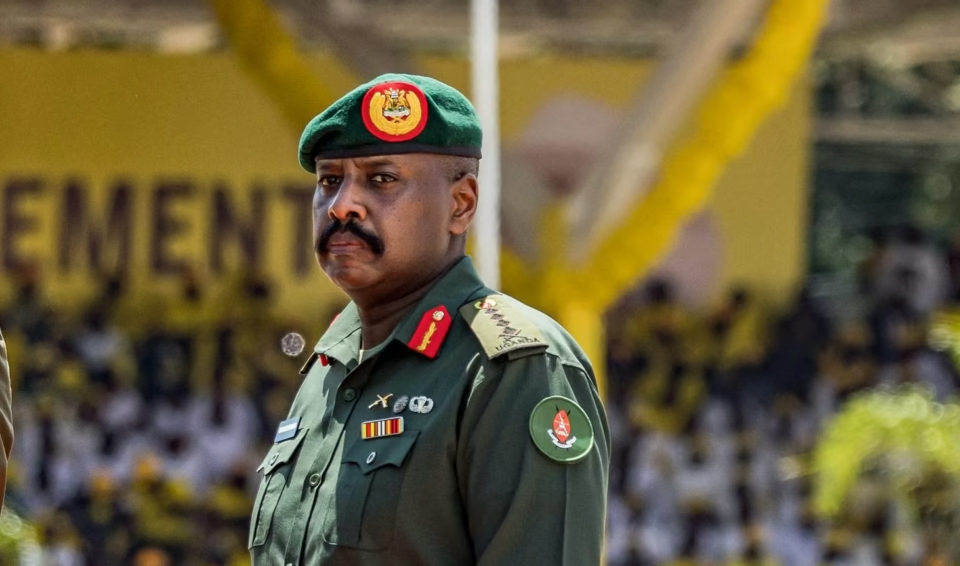
The government has defended Gen. Muhoozi Kainerugaba, the Chief of Defence Forces (CDF) of the Uganda People’s Defence Forces (UPDF), against allegations published in The New York Times, accusing sections of the Western media of promoting biased narratives about Uganda’s political leadership.
In a statement issued by Col. Chris Magezi, the article titled “The Authoritarian Future Is Already Here,” written by Megan K. Stack and published on October 8, 2026, was criticised for what Magezi described as unsubstantiated allegations and a continuation of a broader campaign against Muhoozi.
Magezi argued that the publication relies on narratives advanced by opposition figures and activists, claiming that some Western media organisations have repeatedly portrayed the military chief negatively for political reasons.
The statement cited previous publications by British newspaper The Telegraph in September 2024, The Wall Street Journal in September 2025, and The Economist in September 2026 as examples of what it considers a pattern of unfavourable reporting about Muhoozi and his possible political future.
According to Magezi, such coverage reflects the preferences of foreign media organisations regarding who should succeed President Yoweri Museveni. He maintained, however, that Uganda’s future leadership should be determined by Ugandans.
A central point of contention is the article’s account of alleged mistreatment of Ugandan writer and government critic Kakwenza Rukirabashaija during detention.
According to Magezi’s statement, Stack’s article quotes Kakwenza alleging that Muhoozi subjected him to humiliating treatment during a visit while he was detained and later offered him money to remain silent about the alleged abuse.
The article also reportedly recounts Kakwenza’s claims that he was severely beaten, suffered fractured ankle bones and kidney damage, and sustained scars on his back.
Magezi rejected the allegations, describing them as false and politically motivated. He further claimed that Muhoozi had never met Kakwenza in his life.
The statement questioned aspects of Kakwenza’s account, arguing that some details were inconsistent. Magezi also challenged the reliance on accounts from individuals he characterised as politically motivated sources.
However, the statement did not present independent evidence to establish its claim that the two men had never met. The allegations and the denial therefore remain competing accounts that require independent verification.
Magezi also accused sections of the Western media of applying double standards when reporting on African leaders, arguing that online remarks, jokes and controversial public statements should not be the sole basis for assessing a leader’s conduct or political record.
He maintained that Muhoozi’s military career and achievements should be considered separately from criticism arising from media reports and social media activity.
The statement further argued that allegations of human rights abuses should be subjected to rigorous scrutiny and supported by credible evidence rather than relying solely on accounts from political opponents or activists.
Magezi described the reporting as an attempt to reinforce negative perceptions of African leadership among Western audiences.
The statement also defended the UPDF’s role in maintaining law and order, saying the military operates within Uganda’s constitutional and legal framework.
Magezi argued that the army has a constitutional responsibility to support civilian authorities when required, including in matters concerning public order.
He added that military personnel who violate the law should be subjected to discipline and accountability, while insisting that Uganda’s courts remain available to consider cases in which evidence is presented.
The statement also pointed to the opposition’s use of the courts as evidence that legal avenues remain open for challenging government actions.
However, it did not provide details of independent investigations or judicial findings addressing the specific allegations raised in the New York Times article.
The dispute highlights continuing tensions between Uganda’s government, independent critics and international media organisations over reporting on human rights, military conduct and the country’s political future.
While Magezi has dismissed the allegations against Muhoozi as unfounded, the claims reported by The New York Times concern matters that would ordinarily require careful examination of evidence, witness accounts and relevant official records.
The statement raises questions about media standards, the verification of allegations and the role of foreign publications in covering Uganda’s political affairs.
The supplied statement ends mid-sentence, beginning with the words, “Lastly, what will not be tolerated is external interference in the affairs of Uganda…”. Its concluding argument has therefore not been included to avoid misrepresenting Magezi’s intended message.