

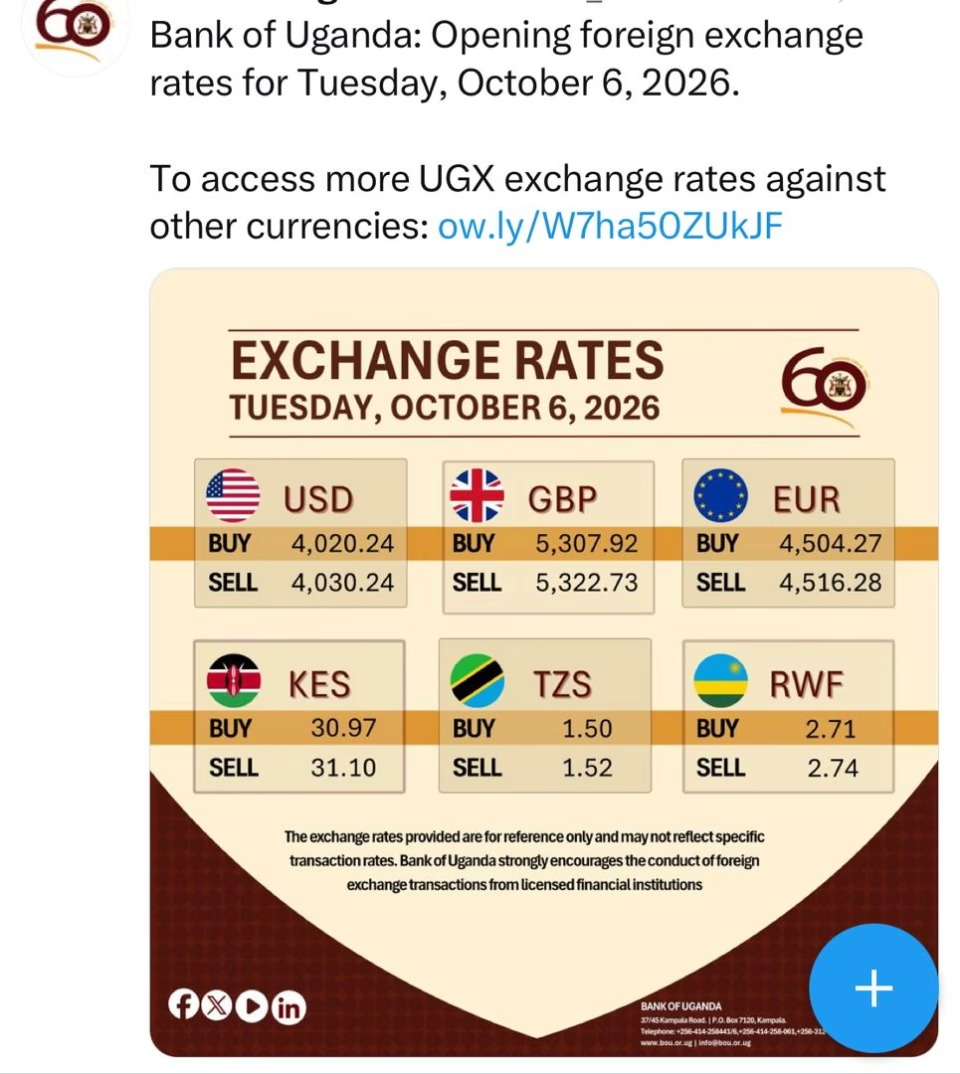
The Uganda shilling has weakened beyond the Shs4,000 mark against the US dollar, raising fresh concerns about rising costs of fuel, transport and other imported goods.
According to the Bank of Uganda’s opening foreign exchange rates for Tuesday, October 6, 2026, the US dollar was trading at Shs4,020.24 on the buying side and Shs4,030.24 on the selling side.
The latest movement comes amid continued demand for dollars in the foreign exchange market, putting pressure on the shilling and increasing the cost of importing goods and services.
The weakening currency is already being felt at the pump. An analysis indicates that petrol at major fuel dealers has risen to about Shs7,000 per litre, representing a 15.1 percent increase compared with August.
The combination of a weaker shilling and higher fuel prices could put additional pressure on household incomes and business operating costs.
Fuel prices have a wide impact on the economy because increases at the pump tend to feed into transport charges, food distribution and the cost of goods and services. Businesses that depend on imported raw materials or equipment may also face higher costs when the local currency loses value against the dollar.
The latest depreciation comes at a time when demand for US dollars remains strong. Importers, businesses and other market participants require dollars to settle international payments, creating additional demand for the foreign currency.
At the same time, movements in global markets and Uganda’s import requirements can influence the supply-demand balance in the local foreign exchange market.
The situation has renewed attention on the role of the Bank of Uganda, particularly whether continued pressure on the shilling could require action by the central bank.
However, the central bank’s foreign exchange rates are mainly provided as reference rates and may not necessarily reflect the exact rates offered by individual financial institutions and foreign exchange dealers.
What does it mean for ordinary Ugandans?
For households, a prolonged weakening of the shilling could translate into higher prices for imported products and services.
Transport costs could also rise if fuel prices continue increasing, while businesses may pass higher import and operating costs on to consumers.
The key question now is whether the shilling’s decline will stabilise or whether the exchange rate will continue moving higher, potentially putting further pressure on household budgets.
With the dollar now trading above Shs4,000, attention is increasingly turning to the measures the Bank of Uganda may take if foreign exchange pressures intensify.