

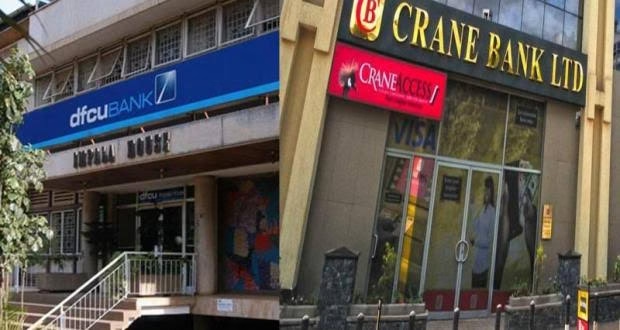
Businessman Dr Sudhir Ruparelia and other former shareholders of Crane Bank have taken their long-running legal battle over the bank’s 2016 takeover to the High Court of Justice in London, opening a major new chapter in one of Uganda’s most contentious banking disputes.
A 16-week trial in the case, Crane Bank Limited & Ors v DFCU Bank Limited & Ors, under Claim No. CL-2020-000859, begins on Monday, October 5, 2026.
The proceedings are expected to examine a wide range of disputed issues surrounding the collapse of Crane Bank, its placement under statutory management by the Bank of Uganda, the subsequent receivership and the eventual transfer of most of its assets and liabilities to DFCU Bank.
At the heart of the case are allegations by the claimants that the process surrounding the takeover involved unlawful conduct, corruption and conspiracy. The defendants have denied the allegations and maintain that the transactions and acquisition were lawful.
The London trial could therefore become an important test of how an English commercial court deals with a complex dispute involving a foreign banking regulator, private investors and transactions connected to Uganda.
Crane Bank, founded by Dr Sudhir Ruparelia, grew into one of Uganda’s largest locally owned commercial banks before its fortunes changed dramatically in 2016.
In October that year, the Bank of Uganda placed Crane Bank under statutory management, citing severe undercapitalisation and concerns about the bank’s financial position.
The central bank subsequently placed Crane Bank into receivership in January 2017.
Most of Crane Bank’s assets and liabilities were later transferred to DFCU Bank, a move that effectively brought the bank’s independent operations to an end.
The takeover generated intense public debate in Uganda, with questions raised over the circumstances that led to Crane Bank’s collapse, the regulator’s handling of the institution and the valuation and transfer of its assets and liabilities.
Dr Ruparelia and the other claimants have continued to challenge aspects of the process.
DFCU and the other defendants, however, have consistently rejected the allegations and defended the legality of the transactions.
The London proceedings involve seven claimants and 15 defendants, making the case both legally and commercially complex.
The claimants include Crane Bank Limited, Dr Sudhir Ruparelia, Jyotsna Ruparelia, Meera Ruparelia, the estate of the late Rajiv Ruparelia, Tom Mugenga and Sheena Ruparelia.
Among the defendants are DFCU Bank Limited, DFCU Limited, former DFCU executives and a number of institutions and individuals associated with the transactions surrounding Crane Bank.
The defendants also include British International Investment, Norfinance, Rabo Partnerships and Arise, among others.
Different legal teams are representing the parties. Greenberg Traurig represents the claimants, while Freshfields represents DFCU. A&O Shearman represents Arise, while Milbank represents Rabobank.
Given the number of parties involved, the proceedings are expected to involve extensive documentary evidence, witness testimony and detailed legal arguments.
One of the most significant legal features of the case is the absence of the Bank of Uganda as a defendant.
This has created an important jurisdictional dimension to the proceedings because the English court is being asked to examine events connected to decisions made by a foreign state institution without the central bank itself being a party to the case.
The dispute has therefore raised questions concerning state immunity and the foreign act of state doctrine—legal principles that can restrict courts from questioning certain acts performed by foreign governments or state authorities.
The claimants argue that the events surrounding Crane Bank’s takeover cannot be properly examined without considering decisions taken during the regulatory process.
The defendants, on the other hand, are expected to challenge the claimants’ case on a number of grounds, including the circumstances in which the transactions were carried out and the fact that the Bank of Uganda is not a party to the proceeding
The case has already passed an important legal hurdle.
In 2023, the English Court of Appeal allowed the claims to proceed beyond the jurisdictional stage, finding that the foreign act of state doctrine did not prevent the claims from being heard at that point.
That decision did not determine whether the claimants’ allegations were true or whether the defendants were liable.
Instead, it allowed the substantive dispute to continue, paving the way for the extensive trial now beginning in London.
The current proceedings will therefore focus on the evidence and legal arguments surrounding the disputed events rather than simply whether the English courts have jurisdiction to hear the case.
The claimants are expected to rely on a substantial body of evidence, including documents and findings arising from investigations into the Crane Bank takeover.
Among the material they point to is a 2019 Ugandan parliamentary inquiry, which raised concerns about aspects of the handling of Crane Bank’s takeover and questioned the legality of certain actions attributed to the Bank of Uganda.
The claimants are also expected to refer to other documents, correspondence, presentations and transaction records connected to the events.
The court will determine what weight should be attached to such material and whether it supports the claims being advanced.
The proceedings are also expected to involve expert evidence and detailed examination of the financial and commercial circumstances surrounding the bank’s takeover.
Another issue the claimants have raised concerns Patrick Ho, the Hong Kong businessman who was convicted in the United States in a separate bribery case involving Uganda’s then Foreign Minister.
The relevance of the Patrick Ho case to the Crane Bank proceedings, as well as the evidential weight that should be attached to it, will ultimately be determined by the London court.
The mention of the case forms part of the wider allegations and evidential arguments that the claimants intend to place before the court.
It is important, however, that allegations or evidence relied upon by one side are not treated as findings of fact unless and until the court makes such findings.
DFCU and the other defendants have rejected the allegations brought against them.
DFCU has defended the acquisition and has pointed to the involvement of professional advisers, including PricewaterhouseCoopers, during the process.
The bank has also raised arguments concerning the claimants’ failure to challenge aspects of Crane Bank’s administration through the Ugandan courts at the relevant time.
The defendants are expected to argue their respective positions in detail during the 16-week trial, with the court ultimately required to determine which claims, if any, have been established.
The case goes beyond the interests of the former Crane Bank shareholders and DFCU.
Crane Bank was once one of Uganda’s major indigenous commercial banks, and its collapse became a major issue in discussions about banking regulation, financial stability and the treatment of locally owned financial institutions.
The dispute also raised questions about the powers available to financial regulators when dealing with banks experiencing financial difficulties.
For investors and financial institutions, the London proceedings could provide important guidance on how English courts approach cross-border commercial disputes involving transactions connected to foreign regulatory authorities.
The case could also have wider implications for disputes in which private investors seek remedies in one jurisdiction over events that occurred largely in another country.
The trial comes nearly a decade after the Bank of Uganda first placed Crane Bank under statutory management.
Since then, the dispute has moved through investigations, parliamentary scrutiny, court proceedings and years of public debate.
The London case now brings many of the contested issues before an international commercial court, where both sides will have an opportunity to present documentary and oral evidence in support of their respective positions.
The court is not simply being asked to revisit the history of Crane Bank. It will have to determine complex questions about the conduct of the parties, the transactions surrounding the bank’s takeover and the legal consequences of the events in dispute.
With the trial expected to run for approximately 16 weeks, the proceedings are likely to generate a substantial record of evidence before judgment is eventually delivered.
For Dr Sudhir Ruparelia and the other claimants, the opening of the trial marks a significant milestone in their long-running attempt to challenge aspects of the events that led to the collapse and transfer of Crane Bank.
For DFCU and the other defendants, the proceedings provide an opportunity to defend their actions and challenge the allegations brought against them.
After years of investigations, litigation and public controversy, the Crane Bank saga has now entered one of its most closely watched stages—with the latest chapter unfolding thousands of kilometres from Kampala, at the High Court in London.