


The Ministry of Agriculture, Animal Industry and Fisheries (MAAIF) has attributed recent fluctuations in Uganda’s coffee and cocoa prices largely to changes in international supply, weather conditions and market expectations, while assuring farmers that the decline does not necessarily mean the collapse of demand for their produce.
In a statement dated September 20, 2026, Agriculture Minister Frank K. Tumwebaze said coffee and cocoa are internationally traded commodities whose prices in Uganda are influenced by global production, inventories, weather, shipping costs, currencies and purchasing decisions in major producing and consuming countries.
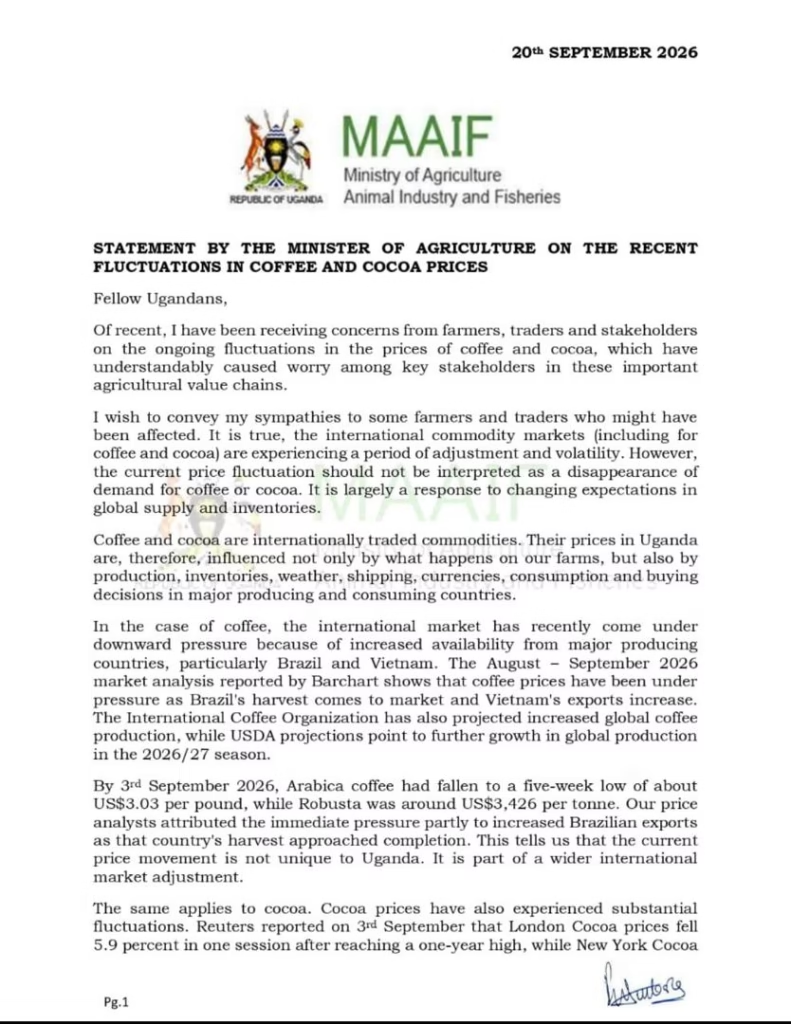
For coffee, Tumwebaze pointed to increased supplies from Brazil and Vietnam as some of the factors putting downward pressure on international prices. He said Brazil’s harvest was reaching the market at a time when Vietnam’s exports were also increasing.
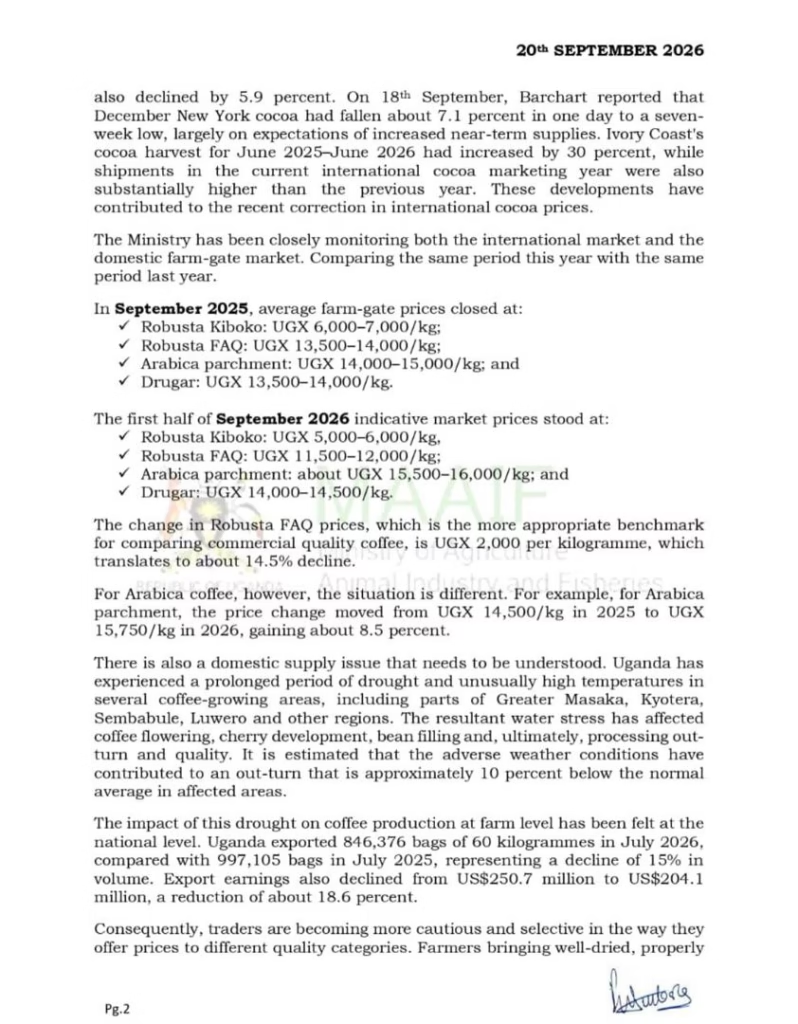
The minister said the impact is already visible in Uganda’s domestic market. In September 2025, Robusta FAQ coffee was trading at between Shs13,500 and Shs14,000 per kilogramme, compared with about Shs11,500–12,000 during the first half of September 2026.
This represents a decline of about 14.5 percent for the Robusta FAQ category.
However, the ministry noted that not all coffee varieties have experienced a decline. Arabica parchment, for example, rose from about Shs14,500 per kilogramme in 2025 to approximately Shs15,750 in 2026, according to the figures presented by the minister.
Uganda’s coffee export figures have also come under pressure. The country exported 846,376 bags of 60 kilogrammes each in July 2026, compared with 997,105 bags during the same month in 2025. Export earnings fell from US$250.7 million to US$204.1 million.
The ministry also linked part of the domestic pressure to prolonged drought and unusually high temperatures in coffee-growing areas, including parts of Greater Masaka, Kyotera, Sembabule and Luwero. According to the ministry, the adverse weather has affected flowering, cherry development, bean filling and coffee quality.
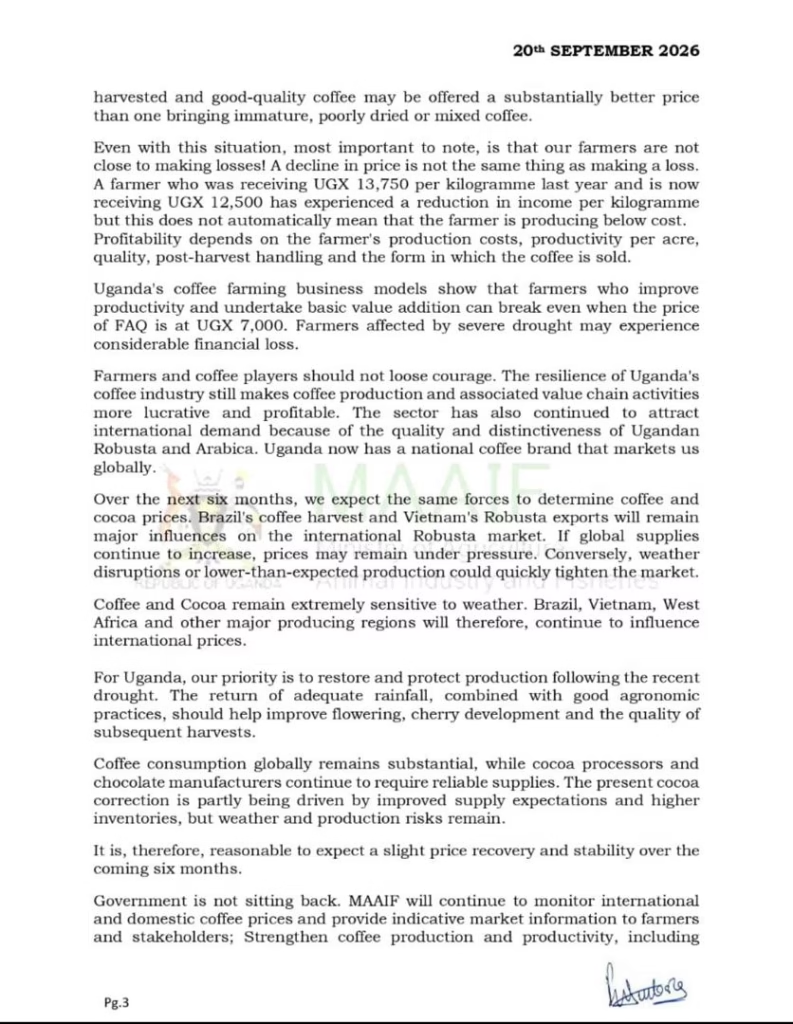
Tumwebaze said farmers should not automatically interpret lower prices as losses, noting that profitability also depends on production costs, productivity, quality and post-harvest handling.
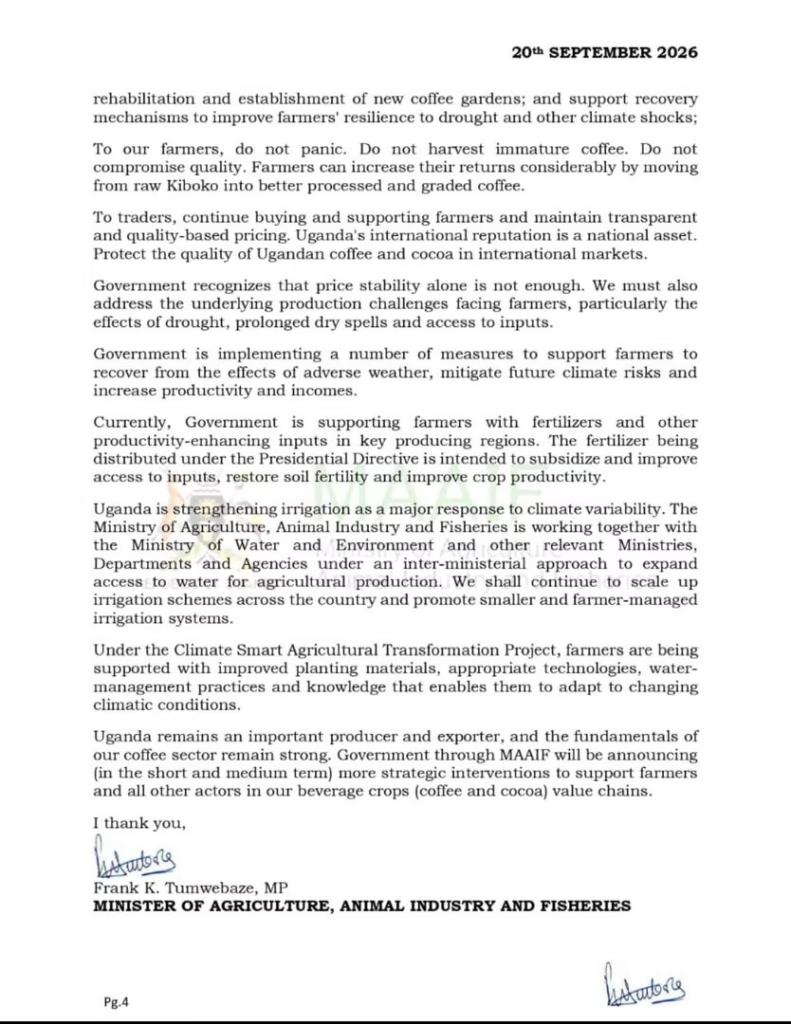
He urged farmers not to harvest immature coffee or compromise quality, saying better processing and grading can improve returns.
The minister said cocoa prices have experienced similar volatility on international markets.
He cited recent declines in London and New York cocoa prices, linking the correction partly to expectations of increased supplies and higher inventories. Côte d’Ivoire’s increased cocoa production and higher shipments were also identified among the factors affecting international prices.
Looking ahead, Tumwebaze said coffee prices would continue to be influenced by Brazil’s harvest and Vietnam’s Robusta exports. He warned that increased global supplies could keep prices under pressure, while weather disruptions or lower-than-expected production could tighten supply and push prices higher.
For Uganda, he said the government’s focus would be on restoring production following recent drought conditions and improving farmers’ resilience to climate-related shocks.
MAAIF says it is supporting farmers through productivity-enhancing inputs, including fertilisers, while government agencies are also working to expand irrigation and promote climate-smart agricultural practices.
The minister said the government would continue monitoring both domestic and international markets and provide farmers and other stakeholders with market information.
He also indicated that MAAIF would announce additional short- and medium-term interventions aimed at supporting actors across Uganda’s coffee and cocoa value chains.
Tumwebaze urged farmers to remain focused on quality, productivity and value addition, while calling on traders to maintain transparent, quality-based pricing.
Recent reporting has also confirmed the decline in Uganda’s July coffee export volumes and earnings, although the sector remains a major source of foreign exchange for the country.