

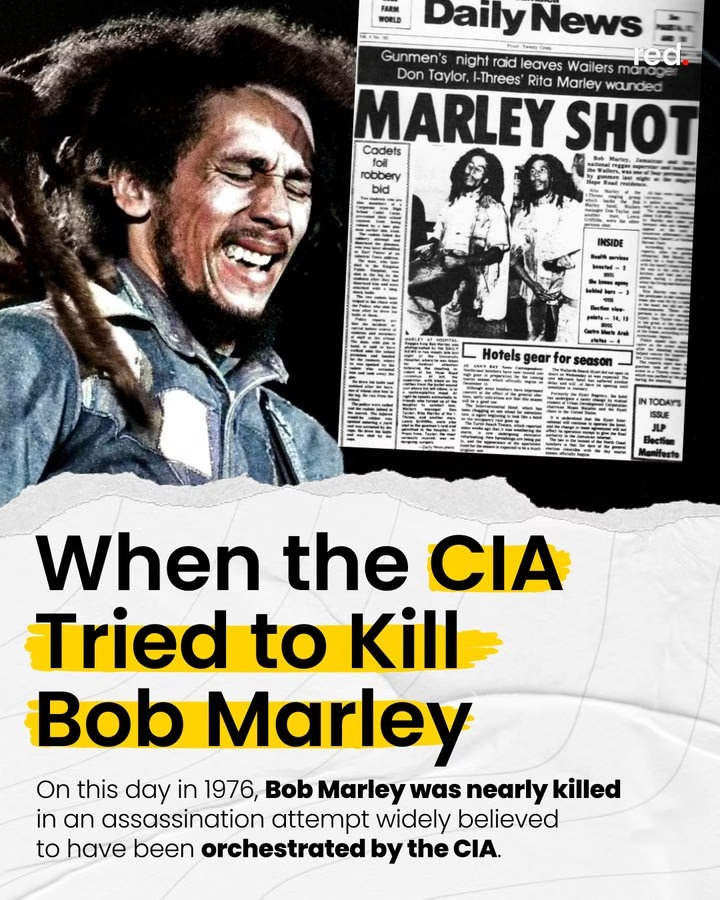
The attempted assassination of Bob Marley on December 3, 1976, was a pivotal event in his life and career. The shooting, which occurred at his home in Kingston, Jamaica, left Marley, his wife Rita, and manager Don Taylor injured, but fortunately, there were no fatalities.
The motives behind the shooting are still debated, with various theories pointing to political and ideological factors. Some believe that the Jamaican Labour Party (JLP), led by Edward Seaga, was involved, while others suggest that the CIA may have played a role.
Despite the trauma and fear that the shooting could have instilled, Marley refused to be silenced. He performed at the Smile Jamaica Concert just two days later, on December 5, 1976, delivering a powerful 90-minute set that showcased his resilience and dedication to his music and message.
The attempted assassination of Bob Marley serves as a testament to the risks he took in using his music as a platform for social commentary and activism. His courage and conviction in the face of adversity continue to inspire generations of music lovers and social justice advocates around the world.
Bob Marley was perceived as a threat by some individuals and groups due to his music, message, and influence. Here are some reasons why:

- Social and Political Commentary: Marley’s music addressed issues like poverty, inequality, and social justice, which resonated with the oppressed and marginalized. His songs, such as “Get Up, Stand Up” and “I Shot the Sheriff,” were seen as a call to action, challenging the status quo.
- Rastafarianism and Black Empowerment: Marley’s adherence to Rastafarianism and his advocacy for black empowerment and self-reliance were viewed as a threat to the established order. His music and message promoted African identity, pride, and unity.
- Influence on Jamaican Politics: Marley’s music and influence were seen as a potential threat to the political establishment in Jamaica. His support for the People’s National Party (PNP) and his criticism of the Jamaican Labour Party (JLP) may have contributed to the perceived threat.
- International Recognition and Credibility: Marley’s growing international recognition and credibility as a musician and social commentator may have been seen as a threat to those who sought to maintain control and suppress dissenting voices.
- Mobilizing the Youth: Marley’s music and message had a significant impact on Jamaican youth, inspiring them to take action and demand change. This mobilization of young people may have been perceived as a threat to the established power structures.
Overall, Bob Marley’s music, message, and influence posed a threat to those who sought to maintain control, suppress dissent, and preserve the status quo.