

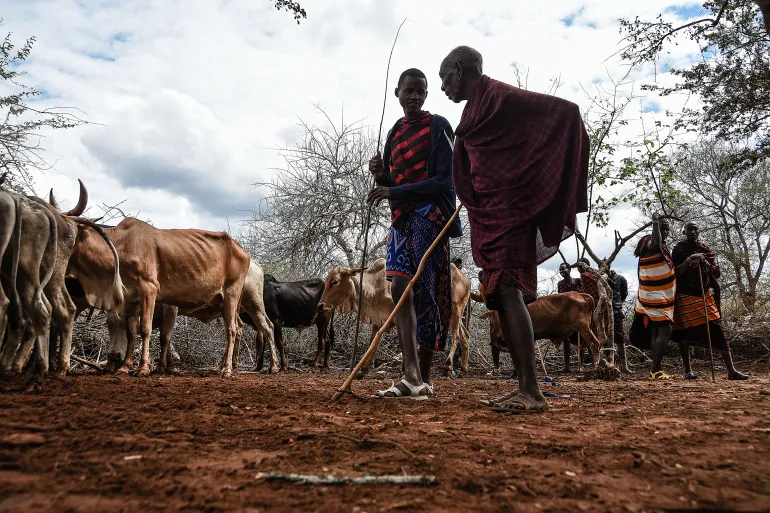
Maasai tribesmen at one of the livestock market
July 31—Tanzania has been forcibly evicting Indigenous Maasai from their ancestral lands, a Human Rights Watch (HRW) report says.
The report, published on Wednesday, found that the Tanzanian government aims to relocate more than 82,000 people from lands it has earmarked for “conservation and tourism purposes”.
The programme, launched in 2022, aims to move people living in the Ngorongoro Conservation Area (NCA), home to the Maasai for generations, to Msomera village, which is roughly 600km (370 miles) away.
Amid the push, tension has erupted between the authorities and the nomadic community, at times resulting in deadly clashes.
HRW interviewed nearly 100 people, including community members who had already moved to Msomera village and others who were facing relocation, between August 2022 and December 2023.
While Tanzania’s nomadic community has been allowed to live within some national parks, authorities say that as the population increases, it encroaches on wildlife habitats.
Violations and violence
The resulting report found that the government had “not sought the free, prior, and informed consent of the Indigenous Maasai residents in the area” regarding its relocation plan.
The residents also described to HRW the “violations of their rights to land, education, health, and compensation and attacks on critics of the relocation process”.
They also assert that violence has been used during the relocating process, with “government-employed rangers assaulting and beating residents with impunity”.
HRW documented 13 incidents of beatings by rangers between September 2022 and July 2023.
One Msomera resident told HRW that those who spoke out against the relocation faced threats and intimidation from rangers and security forces.
“You’re not allowed to say anything,” the resident said, adding people have “fear in their hearts.”
Juliana Nnoko, a senior researcher on women and land at HRW, said the Tanzanian government needs to respect the rights of Indigenous Maasai communities.
“[It] is an ethical obligation as well as a legal one,” she said. “The government should urgently reconsider its approach to ensure the survival, well-being, and dignity of the Maasai people, which this relocation process is putting at grave risk.”
Tanzania’s government has consistently maintained that its relocation scheme observes the country’s laws regarding rights.