
Uganda’s digital number plate project is beginning to show results in the recovery of stolen vehicles, but questions over motorcycle tracking, the cost of the plates and the overall operation of the system remain unresolved.
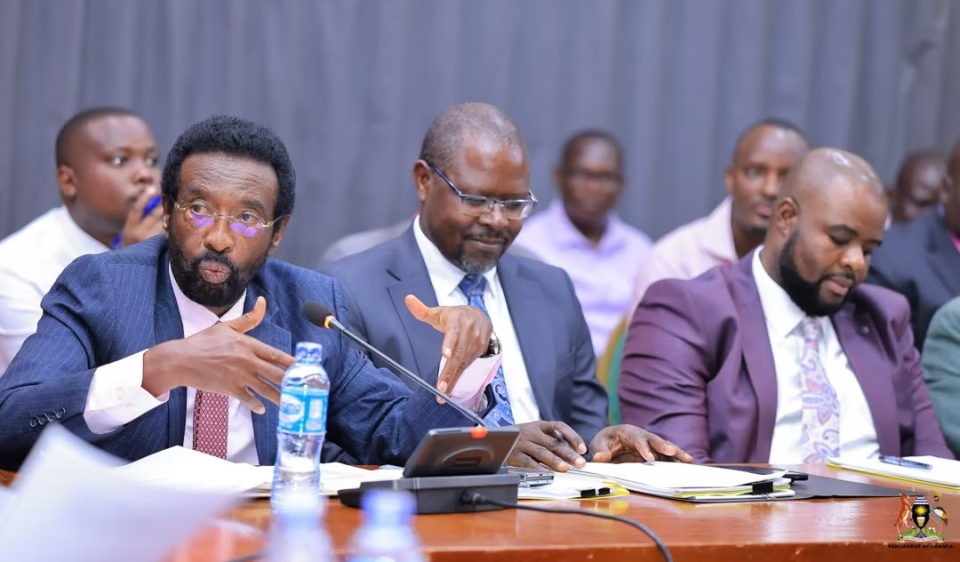
Security Minister Jim Muhwezi told Parliament’s Physical Infrastructure Committee on Wednesday that the technology was operational across the country and had already helped security agencies recover stolen vehicles.
The committee is currently examining the implementation of the digital number plate project, including complaints surrounding delays in acquiring the plates and the cost charged to motorists.
Muhwezi appeared before the committee together with State Minister for Internal Affairs Juma Witonze and State Minister for Works and Transport in charge of Transport Julius Wandera.
The effectiveness of the tracking system came under particular scrutiny during the meeting.
Bunyole West MP James Waluswaka asked government to clarify whether the tracking technology was actually delivering the results that had been promised.
Waluswaka referred to the 2018 killing of former Arua Municipality MP Ibrahim Abiriga, saying the incident had previously prompted calls for stronger vehicle-tracking technology.
His question was direct: whether the trackers installed as part of the digital plate system were genuinely working.
Muhwezi responded that the system was active and could track vehicles beyond Uganda’s borders.
As an example, he told the MPs that a Police vehicle which had been stolen was traced to Kenya using the system and subsequently recovered.
According to Felix Baryamwisaki, Uganda Police’s Director of ICT and the official overseeing the Integrated Transport Management System, the figures recorded so far show a significant difference between cars and motorcycles.
Out of 375 motor vehicles reported stolen or connected to criminal activity, 337 have reportedly been recovered.
This translates into a recovery rate of roughly 90 per cent.
Motorcycles, however, have presented a much bigger challenge.
Of the 782 motorcycles fitted with digital plates, only 174 have been recovered, representing approximately 22 per cent.
Baryamwisaki said the tracking equipment depends on GPS technology rather than roadside cameras.
He acknowledged the low motorcycle recovery figure but said authorities expected the problem to be addressed.
The committee also received an update on the time motorists spend waiting for their digital plates.
Winston Katushabe, Commissioner for Transport Regulation and Safety at the Ministry of Works and Transport, said the processing period had improved considerably.
He told the MPs that applicants were waiting an average of 19 days in December 2025.
By September 2026, the average waiting period had dropped to about two days.
At the Malaba and Mutukula One Stop Border Posts, Katushabe said the process could be completed within hours.
The improvement in processing time, however, has not ended criticism of the project.
Members of the committee also challenged the government over the Shs714,000 fee for digital number plates.
Some MPs argued that the charge places considerable pressure on ordinary road users, particularly motorcycle taxi operators.
Namisindwa County MP Metrine Nanzala questioned why motorcycles and vehicles were being subjected to the same charge despite differences in the economic circumstances of their owners.
She argued that boda boda riders, who generally operate on lower incomes, should have been considered separately when determining the cost.
The issue of pricing is expected to remain part of the committee’s wider examination of the digital number plate programme.
Rather than relying solely on explanations from government officials, the committee has decided to inspect the ITMS monitoring centre.
The MPs want to see for themselves how the system detects and identifies vehicles, how data from the digital plates is processed and how Police use the information during investigations and vehicle recovery operations.
Committee chairperson Mwine Mpaka said the legislators were particularly interested in seeing whether the tracking function works in practice.
“We shall have our own number plates. Do not expect to show us your own number plates. We want to see if you are tracking,” Mpaka told officials.
The planned inspection will form part of the committee’s broader review of the digital number plate project, including its financing, contracts, implementation and day-to-day operation.
While government says the system is already helping recover stolen vehicles, the committee’s inspection could provide MPs with a clearer picture of how effectively the technology is working, particularly in relation to motorcycles.