
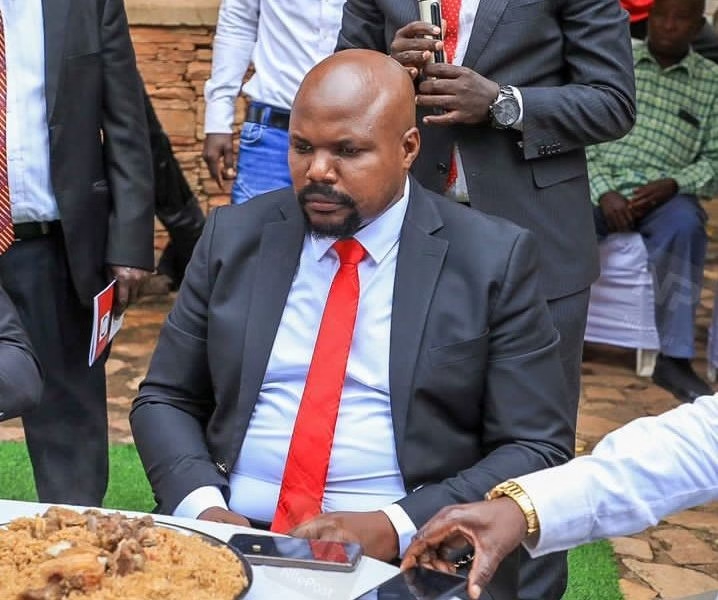
Common Man’s Party leader Mubarak has emerged as one of the most vocal voices in the ongoing Kizza Besigye treason case, shifting the conversation away from political negotiations and firmly toward what he calls basic justice first.
In a strongly worded but measured position, Mubarak says the idea of Besigye striking any political deal with government at this stage is unrealistic. Instead, he insists the opposition veteran should first be granted bail, arguing that freedom is necessary before any meaningful decisions or discussions can take place.
“Let him be free first. Only then can he think clearly and decide without pressure,” Mubarak’s position suggests.
He further cast doubt on the likelihood of Besigye accepting a ruling from Justice Emmanuel Baguma, who is presiding over the high-profile trial.
The treason case against Dr Kizza Besigye has become one of Uganda’s most closely followed political trials, and Mubarak has positioned himself as a key commentator on its fairness and direction.
At the centre of the prosecution’s case is testimony from Andrew Wilson Orlando, a British-American private investigator who claims he infiltrated Besigye’s circle by posing as a wealthy investor.
Orlando told court he offered fake promises of $5 million, weapons, and military training to gain trust, and secretly recorded conversations. He also alleged discussions involving training in Kenya, weapons supply, and even a plan targeting President Museveni with a drone.
These remain unproven allegations in court, and Besigye has consistently denied any involvement in violent or illegal activity, maintaining that his struggle is political and democratic.
Mubarak also revealed why he and other opposition figures have been cautious in publicly defending Besigye.
According to him, the case appears to be expanding, and there is growing fear that more individuals could be implicated.
“People are careful because no one wants to speak today and become part of tomorrow’s case file,” he implied.
This, he says, has created a climate of silence and caution within opposition circles.
Despite his caution, Mubarak was firm on one principle: Besigye’s rights must not be compromised.
He insists the opposition leader must be allowed a fair trial and the freedom to choose his own lawyers without interference.
Mubarak also questioned why such rights should be denied in this case when, in Uganda’s past, even armed rebel groups like the LRA under Joseph Kony was granted a right to a lawyer when he was engaged in dialogue and mediation efforts.
For him, the message is simple: if dialogue was possible in extreme cases, then fairness must apply here too.
The treason trial involves multiple accused persons, including Obeid Lutale and Captain Denis Oola, with allegations stretching across Uganda, Kenya, Switzerland, and Greece.
The prosecution claims the group planned to overthrow the government by force, while the defence is expected to challenge both the evidence and how it was obtained.
Orlando’s undercover testimony — involving fake identities, covert recordings, and staged financial offers — remains one of the most controversial elements of the case.
At the heart of Mubarak’s intervention is a consistent message: justice must come before political bargaining.
He argues that Uganda must protect constitutional rights regardless of the seriousness of the charges. Bail, access to lawyers, and a fair hearing, he says, are not privileges but rights.
Any political discussions, he adds, should only happen when Besigye is free and able to make decisions without pressure.