

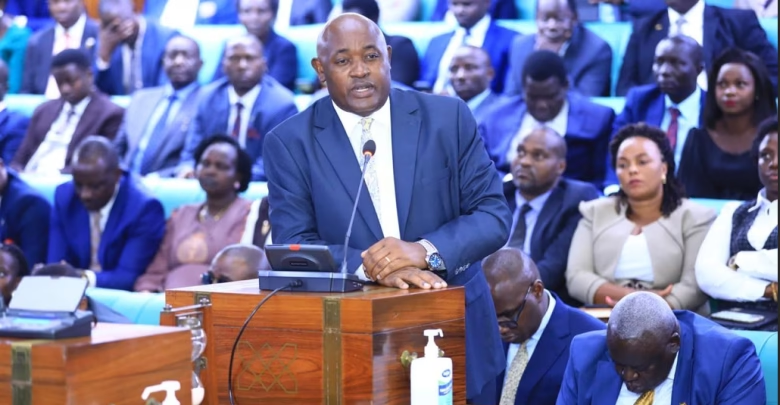
Uganda’s medical interns have received a major boost after Deputy Speaker of Parliament Thomas Tayebwa announced that government has agreed to address two of their key concerns.
Tayebwa said government has agreed to restore medical interns’ allowances following an earlier decision that had suspended their payments. He also announced a new arrangement allowing medical students to graduate before beginning their mandatory internship year.
The development comes after months of tension between medical interns and the Ministry of Health over changes to the internship programme, which affected allowances and delayed the deployment of the 2026 intake.
Adding clarity to the financial side of the matter, Health Minister Dr Chris Baryomunsi said the current cohort of medical interns will continue receiving a monthly allowance of Shs1,268,929, subject to tax. After deductions, the interns are expected to receive approximately Shs1 million as net pay each month.
The allowance issue has been one of the biggest points of contention between the interns and government. Medical graduates had raised concerns about reduced financial support, particularly after the monthly allowance was reported to have fallen from about Shs2.5 million to Shs1 million.
The changes to the internship programme sparked protests, strikes and legal battles, with interns demanding better financial support and clarity over their status.
The reclassification of internship as a continuation of training rather than a formal employment arrangement also created uncertainty over payments and deployment, leaving some members of the 2026 intake waiting longer than expected to begin their internship.
Tayebwa’s announcement that students will now be able to graduate before starting internship is expected to address another long-standing concern within the medical training system. It could also make it easier for graduates to transition from university into their mandatory practical training.
For the interns, however, the immediate focus is likely to be on whether the government commitments will be implemented smoothly and whether allowances will be paid consistently.
The latest developments offer some relief after months of uncertainty, but they also put the government under pressure to ensure that the agreed arrangements are clearly communicated and implemented without further delays.
For thousands of young medical professionals preparing to begin their careers, the restoration and clarification of internship allowances could provide much-needed financial stability as they gain practical experience in Uganda’s health facilities.