
More than three decades have passed since Greenland Bank shut its doors, but for thousands of former shareholders, the story is far from over. What was once celebrated as one of Uganda’s leading indigenous commercial banks has become one of the country’s longest-running legal battles, with many investors still hoping to recover what they believe they lost.
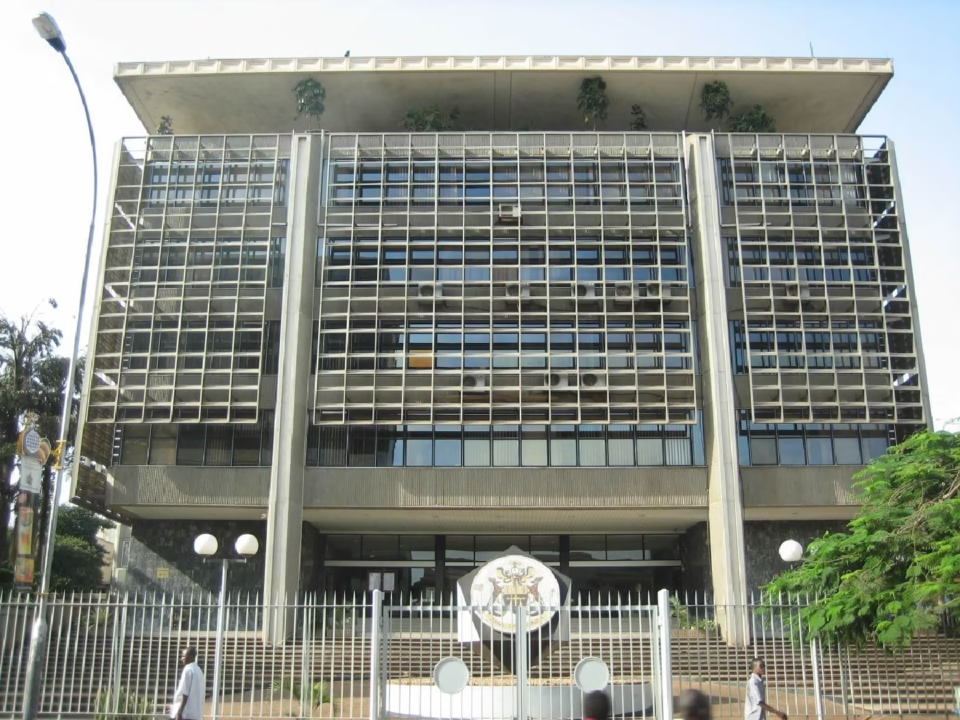
Operating from the building now known as Charm Towers in the heart of Kampala, Greenland Bank symbolized the ambition of Ugandan entrepreneurs who wanted to build a strong locally owned financial institution at a time when the country was opening its economy to private investment.
The bank attracted several influential Ugandan businessmen and professionals, including Gen. Salim Saleh, the late Dr. Suleiman Kiggundu, the late James Mulwana, Kaddu Kibera, the late Kaya Kavuma, the late Bala Mugerwa, Joseph Mulwana Muli, the late Sam Yubaba and other directors who helped guide the institution during its years of operation.
Supporters of Gen. Saleh say his decision to invest in Greenland Bank was rooted in his belief that Ugandans should take ownership of strategic businesses instead of leaving them entirely in foreign hands. They say he bought about 400 shares after the bank’s promoters convinced him that investing in the institution would strengthen local participation in Uganda’s banking sector.
When Greenland Bank was eventually closed, the decision affected thousands of shareholders, depositors and employees. Because of his national profile, Gen. Saleh became one of the most recognizable faces associated with the bank. Those close to him, however, insist that he was not only a director but also one of the investors who suffered losses following the bank’s closure.
Today, while several of the bank’s former directors have since passed away, Gen. Saleh continues to advocate for former shareholders. He has reportedly encouraged all those who owned shares in Greenland Bank to declare their shareholdings so that an accurate record can be compiled. Supporters believe this will help ensure that, if the courts eventually order compensation, genuine shareholders are not left out.
For many former investors, the case goes beyond financial compensation. It is about recognition, accountability and bringing closure to a chapter that has remained open for more than 30 years. They argue that families and businesses affected by the bank’s collapse have waited long enough for a final decision.
The Greenland Bank case remains before the courts, and its outcome could shape the future for thousands of former shareholders. As they continue to wait, Gen. Saleh’s supporters say his campaign reflects a commitment to ensuring that those who invested in what was once one of Uganda’s most ambitious indigenous banks are not forgotten.
Three decades later, the bank may no longer exist, but the hope for justice remains alive among many who are still waiting for the final verdict.