

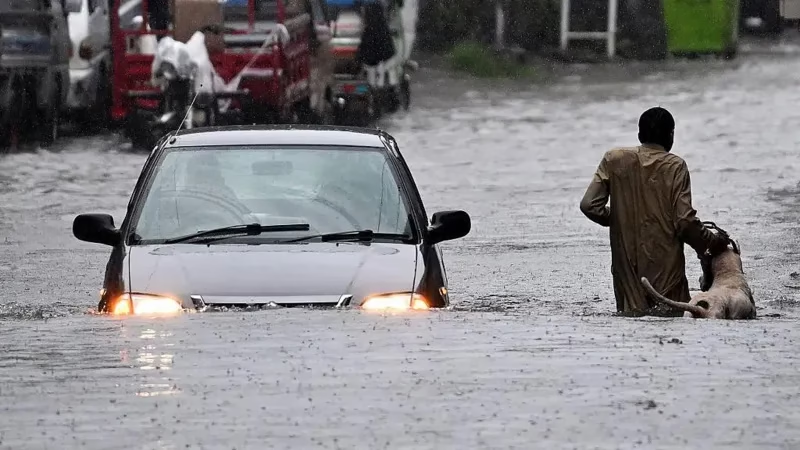
The latest deaths take the toll since the arrival of the monsoon in late June to nearly 180 nationwide
July 17 — Heavy monsoon rains across Pakistan’s Punjab province killed at least 63 people and injured nearly 300 in the past 24 hours, provincial officials said on Thursday, bringing the nationwide death toll from the rains to at least 180 since late June.
It was one of the deadliest days of this year’s rainy season so far.
The downpours caused flooding and building collapses, with most of the deaths caused by the roofs of weaker homes failing. Lahore, the eastern provincial capital, reported 15 deaths, Faisalabad nine, and the farming towns of Okara, Sahiwal and Pakpattan several more.
Since late June, the monsoon rains have killed 103 people and injured 393 in Punjab alone, according to the Provincial Disaster Management Authority (PDMA). More than 120 homes were damaged and six livestock killed.
The National Disaster Management Authority (NDMA) gave the toll of nearly 180 deaths nationwide since June 25 and more than half of them were children. It said more than 1,000 homes had been damaged.
A high flood alert was issued for the River Jhelum at the northern town of Mangla, where water inflows were expected to surge to high levels, according to the Pakistan Meteorological Department. Authorities warned that adjoining streams could also overflow in the next 24 hours, putting nearby communities at risk.
Authorities in the city of Rawalpindi, next to the capital Islamabad, declared Thursday a public holiday to keep people at home, while those living near a swelling river which runs through the city have been asked to evacuate.
Punjab authorities have warned that more rains and flash floods are expected throughout the weekend. Thousands of rescuers across the province have been put on standby.
Pakistan, which has a population of nearly 250 million, is among the countries most vulnerable to climate change.
It bears the brunt of two major weather systems – one can cause high temperatures and drought, while the other brings monsoon rains.
Monsoon rains are a routine part of South Asia’s climate and are essential for crop irrigation and replenishing water supplies. However, their adverse impact has worsened in recent years due to rapid urban expansion, poor drainage systems, and more frequent extreme weather events linked to climate change.