
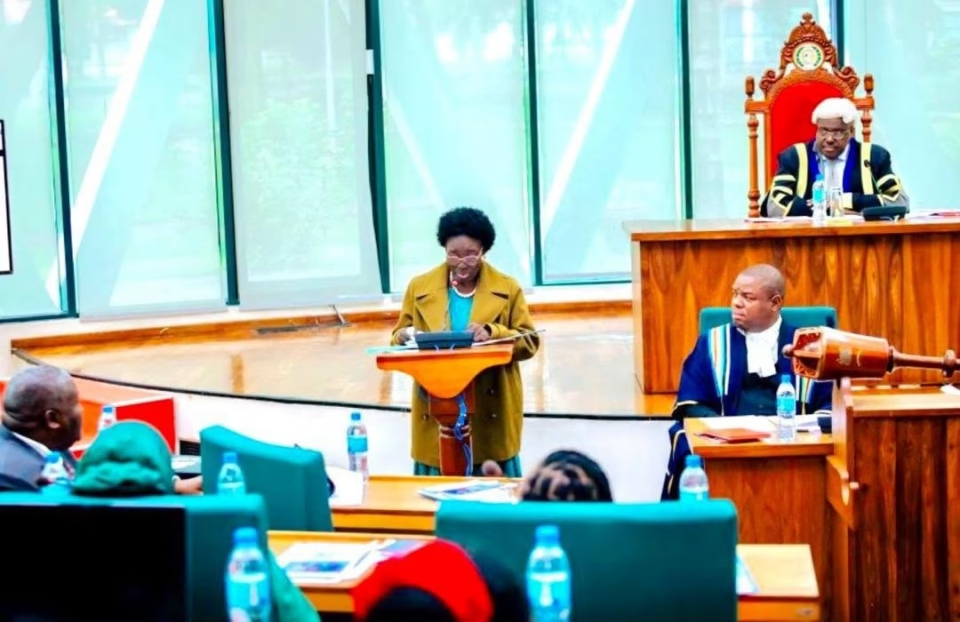
The sun filtered through the tall windows of the East African Legislative Assembly hall in Arusha, casting golden stripes across the polished wooden floors. It was June 23, 2026, and the air hummed with anticipation. Delegates from six nations—Kenya, Uganda, Tanzania, Rwanda, Burundi, and South Sudan—sat in their curved rows, their traditional attire blending with sharp business suits like threads in a vibrant kanga cloth.Hon. Rebecca Alitwala Kadaga stood at the podium, her posture regal, her voice steady and resonant. She had addressed this assembly many times before, but today felt different.
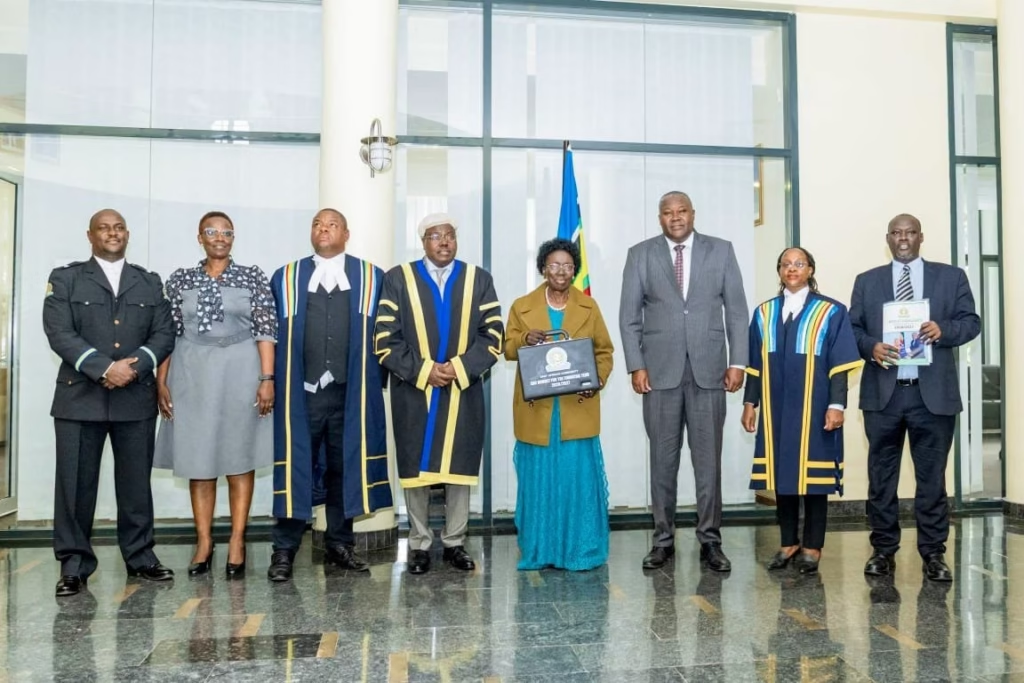
In her hands was not just a budget document, but a blueprint for the future.”Fellow East Africans,” she began, her words carrying the weight of decades of advocacy, “today I present the proposed 2026/2027 Budget of the East African Community. This is more than numbers on paper. It is the fuel for our shared journey.”The hall fell into focused silence. Kadaga paused, letting the moment settle.
She knew the challenges too well. Years of fragmented currencies, border delays that turned a day’s drive into a week’s frustration, and young entrepreneurs forced to choose between ambition and survival. Trade within the region still lagged behind its potential. But she also knew the dream: one East Africa, moving as one.Her eyes swept across the delegates.
“We have built roads that now connect our capitals. We have harmonized tariffs and eased the movement of our people. Yet one pillar remains urgent—the Monetary Union. A single currency is not a luxury; it is the heartbeat of deeper integration. It will slash transaction costs, ignite cross-border trade, and unleash the potential of our 300 million citizens. Imagine a farmer in western Uganda selling maize directly to markets in Nairobi without losing half his profit to exchange rates.
Imagine a tech startup in Kigali partnering seamlessly with innovators in Dar es Salaam. This is not fantasy. This is our destiny.”A murmur rippled through the assembly. Some nodded vigorously; others leaned forward, scribbling notes. In the back row, a young Kenyan delegate named Amani clutched her tablet, her heart racing. Fresh out of university, she had joined the assembly staff six months earlier, skeptical at first.
“Another budget speech,” she had thought. But Kadaga’s passion cracked something open in her.As Kadaga detailed the budget allocations—strengthened infrastructure funds, digital trade platforms, and targeted investments in the Monetary Union road-map—Amani remembered her own story. Her father, a small-scale exporter of coffee from the slopes of Mount Kenya, had lost thousands of shillings over the years simply because the shilling and the shilling didn’t always speak the same language across borders.
“If we had one currency,” he often said, “I could build that second warehouse. I could hire more of our youth.”Kadaga continued, her voice rising with conviction. “This budget is an investment in people. It fast-tracks what our founding fathers envisioned: not just cooperation, but true unity. Enhanced trade.
Economic growth that leaves no one behind. Let us not delay. History will judge us not by how eloquently we spoke, but by how boldly we acted.”When she stepped down from the podium, applause erupted—not polite clapping, but the thunderous kind that comes from belief reignited. Delegates rose to their feet. Outside the hall, under the acacia trees, journalists snapped photos while ordinary East Africans, following the live broadcast on their phones, shared the moment in group chats from Kampala to Juba.
That evening, as the sun dipped behind Mount Meru, Amani found Kadaga on a quiet balcony overlooking the grounds. “Madam Speaker,” she said softly, “your words today… they made me believe again.”Kadaga smiled, the lines of experience softening around her eyes. “Belief is the first currency, my dear.
The rest—shillings, francs, whatever we call it—will follow. We are not just nations side by side. We are one family, waking up to a brighter dawn.”In the weeks that followed, the budget moved forward. Committees sprang into action. Pilot programs for monetary harmonization gained momentum.
Across the region, traders, farmers, students, and dreamers felt a subtle shift—like the first rains after a long dry season. The East African Community was not just surviving. It was beginning to soar.
And somewhere in the heart of it all, Rebecca Alitwala Kadaga allowed herself a quiet moment of satisfaction. The journey was far from over, but on June 23, 2026, they had taken one decisive step closer to the Africa they all deserved.