

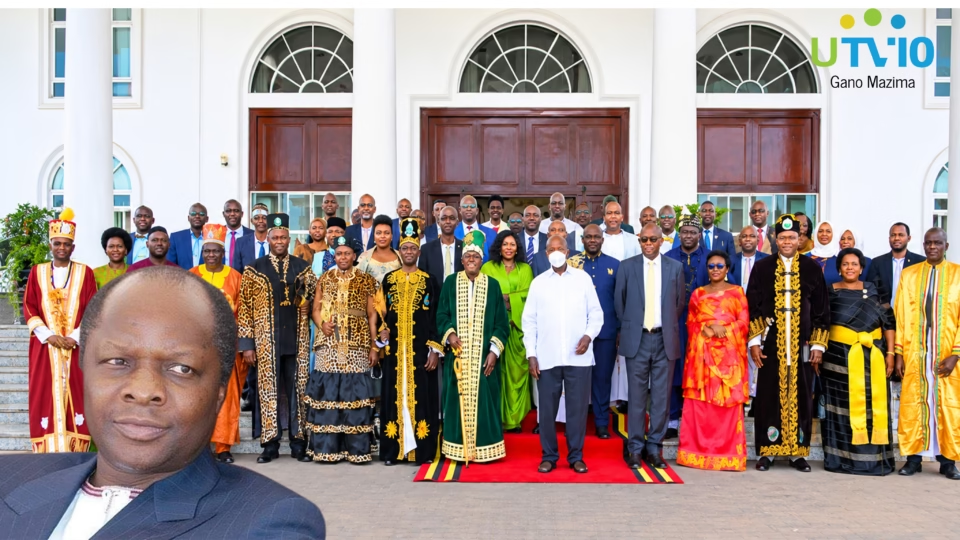
The absence of the Kabaka of Buganda, Ronald Muwenda Mutebi II, from a cultural leaders’ conference hosted by President Yoweri Museveni at State House Entebbe has raised questions about the circumstances surrounding his non-attendance and the representation of the Buganda Kingdom at the meeting.
According to sources familiar with the arrangements, the Kabaka received his invitation letter late, a factor that reportedly affected his participation in the conference.
The sources further indicate that Katikkiro Charles Peter Mayiga had official engagements and travelled to attend to matters concerning the Ssese lslands, while the absence of the Kabaka’s other deputies has also attracted attention.
Another issue reportedly surrounding the Kabaka’s absence relates to the presence of cultural leaders from Kooki and Bugangaizi, whose institutions have separated from Buganda’s traditional authority.
According to the sources, the Kabaka could have faced a difficult institutional and cultural position sitting alongside leaders from these areas, given the unresolved questions surrounding their relationship with the Buganda Kingdom.
However, Buganda Kingdom has not issued an official statement explaining the Kabaka’s absence or confirming whether the late delivery of the invitation and the reported institutional disagreements influenced the decision not to attend.
The absence comes amid broader discussions about the relationship between traditional institutions, government and the constitutional boundaries governing cultural leadership in Uganda.
Meanwhile, President Yoweri Museveni has urged traditional and cultural leaders to concentrate on preserving Uganda’s heritage, indigenous knowledge and cultural identity while leaving politics and administration to elected leaders.
Addressing the Cultural Leaders Conference at State House Entebbe, Museveni said cultural institutions have an important responsibility to protect local languages, traditions and indigenous knowledge.
“Our cultural leaders have an important role in preserving our languages, culture and indigenous knowledge, while leaving politics and administration to elected leaders,” he said.
Museveni hosted kings and other cultural leaders from across Uganda for discussions on cultural preservation, national unity and development.
He warned that tribal divisions and ethnic chauvinism undermine prosperity, calling for stronger national and African integration.
The President said indigenous African societies had established strong economic foundations through agriculture, livestock keeping, crafts, traditional medicine and other specialised occupations, commonly known as Emyooga.
However, he argued that tribal chauvinism and a lack of integration had weakened these traditional economic systems.
“That is why the NRM emphasises patriotism and Pan Africanism. You need Uganda and Africa for your prosperity,” he said.
Museveni also challenged cultural leaders to help Africans overcome colonial attitudes that encourage them to look down upon their own heritage.
“We must reject the colonial mentality that makes Africans despise their own heritage,” he said.
The President said discussions with the cultural leaders would continue the following day.