

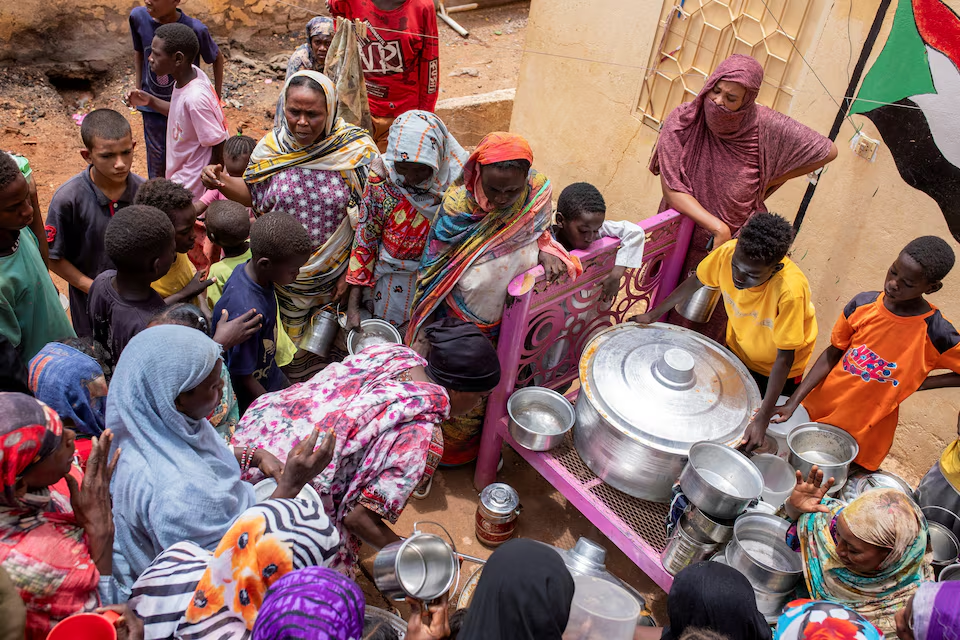
Sudanese women from community kitchens run by local volunteers distribute meals for people who are affected by conflict and extreme hunger and are out of reach of international aid efforts, in Omdurman, Sudan, July 27, 2024
June 16 — Extreme hunger is intensifying in 13 global hot spots, with Gaza, Sudan, South Sudan, Haiti and Mali at immediate risk of famine without urgent humanitarian intervention, a joint United Nations report warned on Monday.
The “Hunger Hotspots” report by the UN Food and Agriculture Organization (FAO) and World Food Programme (WFP) blamed conflict, economic shocks, and climate-related hazards for conditions in the worst-hit areas.
The report predicts food crises in the next five months. It called for investment and help to ensure aid delivery, which it said was being undermined by insecurity and funding gaps.
“This report is a red alert. We know where hunger is rising and we know who is at risk,” said WFP Executive Director Cindy McCain. “Without funding and access, we cannot save lives.”
For famine to be declared, at least 20% of the population in an area must be suffering extreme food shortages, with 30% of children acutely malnourished and two people out of every 10,000 dying daily from starvation or malnutrition and disease.
In Sudan, where famine was confirmed in 2024, the crisis is expected to persist due to conflict and displacement, with almost 25 million people at risk.
South Sudan, hit by flooding and political instability, could see up to 7.7 million people in crisis, with 63,000 in famine-like conditions, the report said.
In Gaza, Israel’s continued military operations and blockade have left the entire population of 2.1 million people facing acute food insecurity, with nearly half a million at risk of famine by the end of September, the report said.
In Haiti, escalating gang violence has displaced thousands, with 8,400 already facing catastrophic hunger, while in Mali conflict and high grain prices put 2,600 people at risk of starvation by the end of August.
Other countries of high concern include Yemen, the Democratic Republic of the Congo, Myanmar, and Nigeria.
“Protecting people’s farms and animals to ensure they can keep producing food where they are, even in the toughest and harshest conditions, is not just urgent – it is essential,” said FAO Director-General QU Dongyu.
Some countries such as Ethiopia, Kenya, and Lebanon, have shown improvements and been removed from the FAO and WFP’s Hunger Hotspots list.