
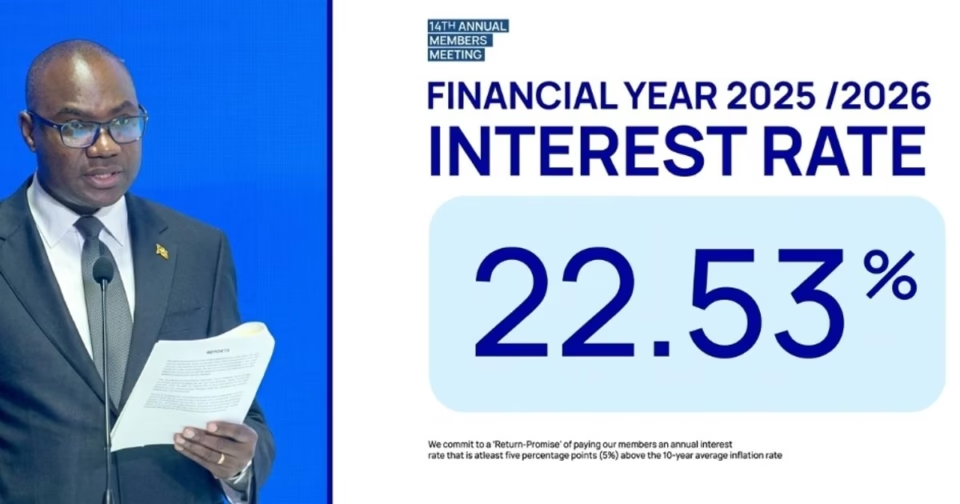
The National Social Security Fund (NSSF) has declared a 22.53% interest rate for members for the financial year ended June 30, 2026, translating into Shs5.44 trillion to be credited to members’ savings.
The rate was announced by Finance Minister Henry Musasizi during NSSF’s 14th Annual Members’ Meeting at the Kampala Serena Hotel on Thursday, September 24, 2026. It is a significant increase from the 13.5% declared for the previous financial year.
The latest declaration comes as the Fund reported strong financial growth. NSSF’s assets under management rose from about Shs26 trillion in June 2025 to Shs32.8 trillion by June 2026, while member contributions increased to Shs2.42 trillion.
NSSF Managing Director Patrick Ayota said the Fund’s economic contribution goes beyond paying interest to members, pointing to its investments, operations and benefits paid to savers.
According to NSSF, it invested Shs4.32 trillion in Uganda, with about 76% invested in government bonds. The Fund’s overall investment portfolio also includes equities and real estate.
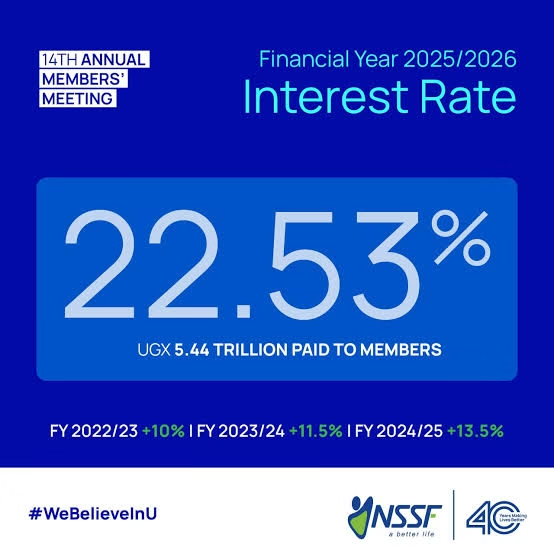
The 22.53% rate continues an upward trend in recent years, following declarations of 10% in 2022/23, 11.5% in 2023/24 and 13.5% in 2024/25. NSSF says the latest rate is the highest in the Fund’s 40-year history.
However, the strong financial performance was accompanied by calls for changes in the way NSSF is governed.
Minister of Gender, Labour and Social Development Lt. Gen. (Rtd) Henry Tumukunde said the Fund needs competent leadership as its role in Uganda’s economy continues to expand.
Tumukunde said individuals who do not meet the requirements to serve on the NSSF Board should leave, stressing that the institution should be managed according to established rules and competence.
He also indicated that the way the NSSF Board is constituted could be reviewed, raising the possibility of reforms to the current governance structure.
NSSF’s official structure currently provides for a nine-member Board of Directors, with members appointed by the Minister of Gender, Labour and Social Development for renewable three-year terms. The Board includes representatives of government, employers, members and the Fund’s executive management.
Tumukunde’s remarks therefore introduce a governance question alongside the Fund’s latest financial performance: whether NSSF’s existing leadership and Board structure should be changed as the institution takes on a larger role in Uganda’s economy.
The minister also hinted at a possible change to the Fund’s name, although the details and proposed alternative name were not immediately specified in the available reports.
For millions of savers, the announcement of the 22.53% return provides a substantial increase in credited interest, while the governance remarks could open a broader discussion about how the Fund should be structured and managed in the future.