

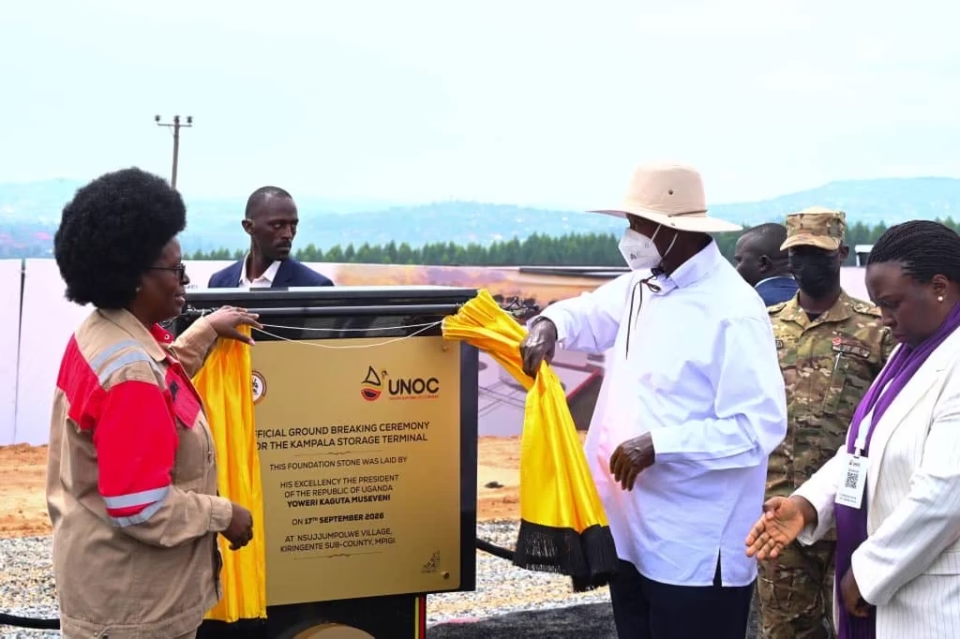
President Yoweri Kaguta Museveni has broken ground for the construction of the US$310 million Kampala Storage Terminal (KST) in Namwabula, Mpigi District, as Uganda moves to strengthen its fuel reserves and reduce vulnerability to supply disruptions.
The facility, being developed by the Uganda National Oil Company (UNOC) on about 300 acres, will have a planned storage capacity of 320 million litres of refined petroleum products. Uganda currently consumes about 240 million litres of petroleum products every month, according to UNOC.
The new terminal will significantly expand Uganda’s storage capacity beyond the existing 30-million-litre Jinja Storage Terminal, while also complementing private fuel storage facilities.
UNOC says the Mpigi terminal will provide space for government strategic reserves, storage and handling services for oil marketing companies, and distribution of petroleum products to Kampala, the Central Region and other parts of th
While launching the project, Museveni also raised concerns about plans to transport petroleum products across Lake Victoria, saying he was uncomfortable with the idea because of the potential consequences of an accident or oil spill on Uganda’s freshwater source.
Museveni said pipelines and railways would be safer alternatives for moving petroleum products.
The President’s position comes as Uganda develops a wider petroleum transportation network. The planned KST is expected to connect to the country’s proposed refinery in Hoima through a roughly 211-kilometre multi-products pipeline, allowing locally refined fuel to be transported to Mpigi for storage and onward distribution.
The Mpigi terminal is expected to become an important link between Uganda’s planned oil production, refining and fuel distribution systems.
The facility will include a future Mpigi Remote Refinery Terminal, which is intended to receive petroleum products through the pipeline from Hoima, store them and facilitate distribution to domestic and regional markets.
The project comes as Uganda advances preparations for domestic oil refining and moves towards first oil production. Earlier this month, Museveni named Uganda’s crude oil “Pearl Sweet.”
Government officials have said the additional storage capacity will provide a buffer against international supply disruptions, market shocks and other emergencies.
With a planned capacity of 320 million litres, the KST would hold more than Uganda’s current average monthly petroleum consumption, giving the country additional room to manage interruptions in fuel imports once the facility becomes operational.
The development therefore places fuel storage, transportation and environmental safety at the centre of Uganda’s emerging petroleum strategy, with the government seeking to connect domestic refining to a more secure network of pipelines, storage facilities and distribution routes.