

The Ugandan government is working on new parole regulations that could see some eligible prisoners serve part of their sentences outside prison under strict supervision.
The move comes as the country’s prisons continue to struggle with overcrowding, with the number of inmates now reported to have risen above 80,000 against a capacity of roughly 23,000.
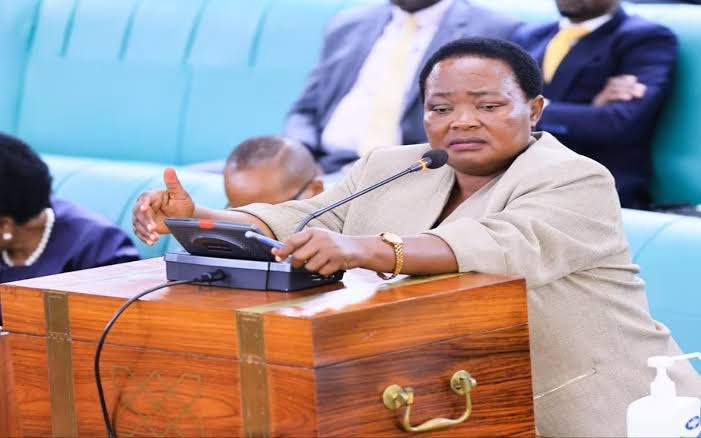
Prime Minister Robinah Nabbanja told Parliament on Wednesday, September 3, 2026, that the Uganda Prisons Service had completed drafting the Parole Rules and Regulations. The regulations are now being reviewed by the First Parliamentary Counsel before they can proceed further.
Under the proposed system, parole would not be automatic for every prisoner. Inmates would have to meet specific conditions, including demonstrating good behaviour while in prison, taking part in rehabilitation programmes and satisfying other requirements set by the authorities.
Those who qualify could be allowed to finish part of their sentences within the community rather than remaining behind prison walls. They would, however, continue to be monitored and would be expected to comply with the conditions attached to their release.
The government hopes the system will help reduce the pressure on Uganda’s already crowded prisons while also giving suitable inmates a chance to gradually return to their communities.
The overcrowding problem has become increasingly difficult for the prison authorities to manage. With more than 80,000 inmates being held in facilities designed for only about 23,000 people, the system is operating at more than three times its intended capacity.
Parole is not the only solution being considered. Government is also looking at increased use of non-custodial sentences for suitable cases, alongside plans to expand prison infrastructure.
If the regulations are approved, the new system could change how Uganda manages some prisoners, particularly those who have shown genuine progress in rehabilitation and are considered ready to begin reintegrating into society.
Still, the success of parole will depend on how carefully prisoners are selected and how effectively those released are supervised. Authorities will also need to ensure that former inmates receive enough support to help them settle back into their communities.
For now, the proposed regulations represent one of the government’s attempts to deal with a prison system under growing pressure, while balancing the need for punishment, rehabilitation and public safety.