

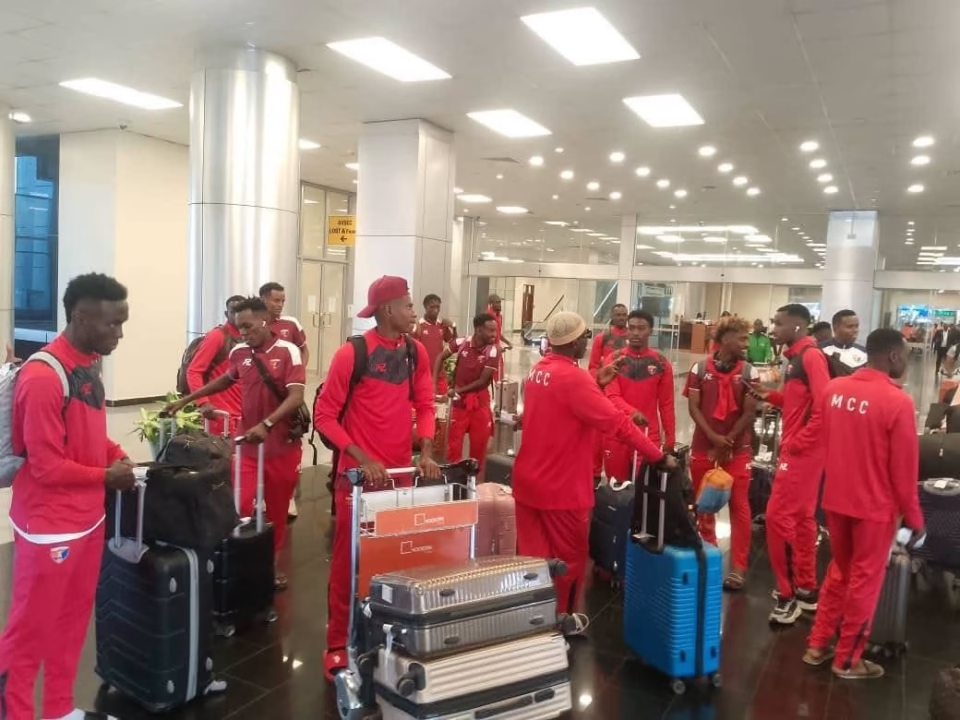
Mogadishu City Club have arrived in Uganda ahead of their CAF Confederation Cup clash with Kitara FC, with the Somali side now settling in as the much-anticipated tie draws closer.
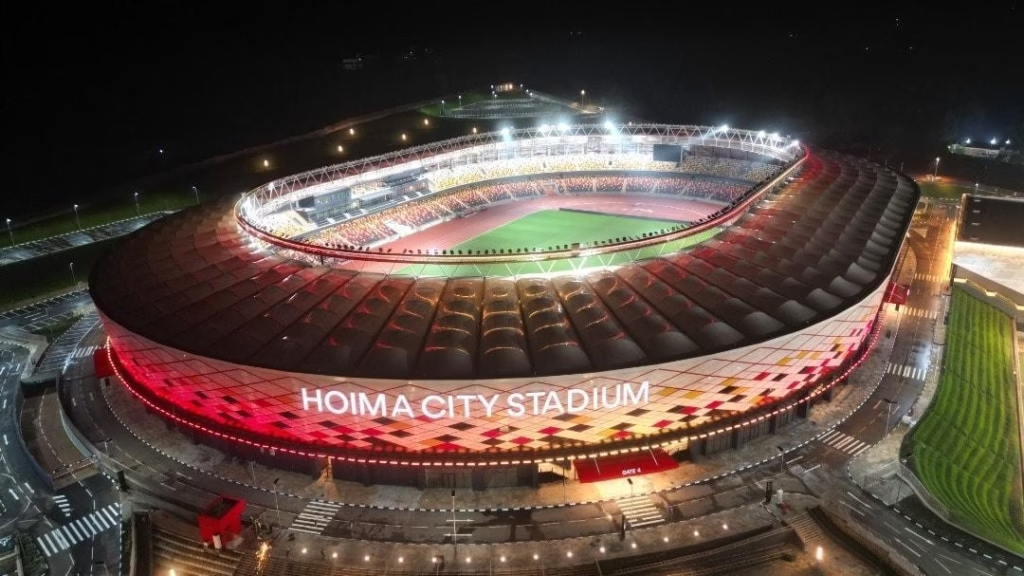
The visitors landed at Entebbe International Airport before making their way to Hoima, where they will face Kitara at Hoima City Stadium.
For the fans, the excitement is building. But this is not an ordinary CAF fixture.
The two clubs will meet in Uganda for both legs of the tie after Somalia was unable to provide a CAF-approved stadium for the matches. As a result, an arrangement was reached through CAF for Hoima City Stadium to host both encounters.
That means Mogadishu City Club will technically be the home side for the first leg, despite playing hundreds of kilometres away from their own country. Kitara will then have another opportunity to play at the same stadium when the return leg comes around.
For the Somali club, playing away from home is nothing new. The country’s football teams have continued to face difficulties hosting international matches at home because of stadium and security-related challenges.
But this particular arrangement gives the tie an interesting twist.
Instead of the usual situation where one team travels for the first leg and the other travels for the return match, both clubs will stay in Uganda and fight for qualification on the same ground.
That could make the contest even more intriguing.
Kitara will be hoping to make the most of the familiar surroundings and home support, while Mogadishu City Club will be looking to prove that playing away from Somalia will not affect their ambitions on the African stage.
While attention is understandably focused on what happens on the pitch, there is also a question that some football followers may quietly be asking: once the two matches are over, will Mogadishu City Club head back to Somalia?
The question is not an allegation that the players or officials have any intention of staying in Uganda. There is currently no confirmed information suggesting that they will fail to return.
However, Somalia’s difficult political and security environment has, over the years, created unusual circumstances around international sporting events, including cases involving athletes and sporting delegations choosing not to return home.
That history makes the eventual departure of the Mogadishu City delegation something that may attract attention after the competition.
For now, however, the Somali club’s focus is on the job at hand.
The players have travelled to Uganda to compete, not simply to participate, and they will know that a strong performance against Kitara could put them in a good position to continue their continental campaign.
For Kitara, meanwhile, the opportunity is equally significant. The Ugandan side will want to use the advantage of playing both matches at Hoima City Stadium to push for progress in the competition.
The stadium is therefore set to become the centre of attention as the two clubs battle for African football glory.
When the whistle goes, the questions surrounding Somalia, the unusual venue arrangement and the return journey will all take a back seat.
For 90 minutes, it will simply be Kitara against Mogadishu City Club — with a place in the next round at stake.