

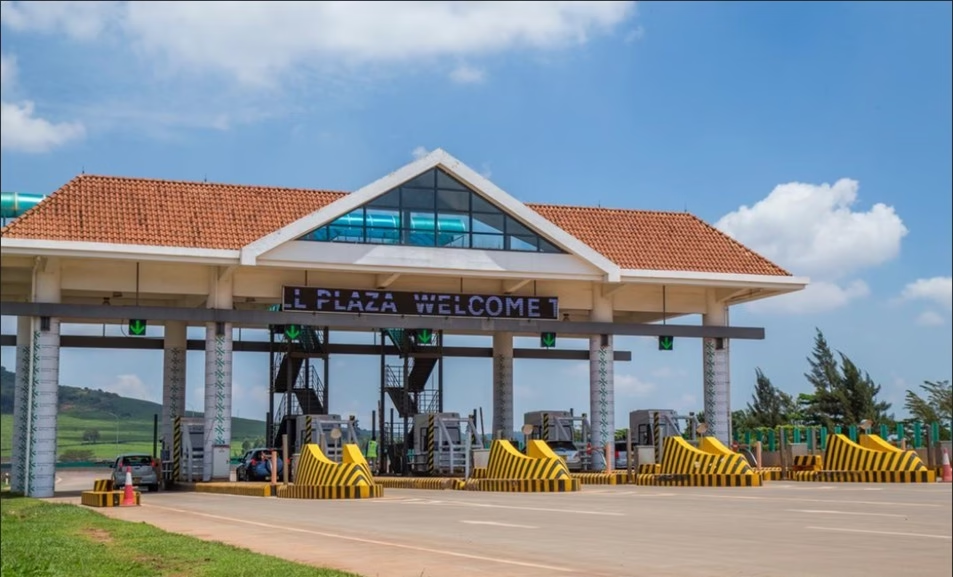
Members of Parliament have called for major changes in the management of toll collections on the Kampala-Entebbe Expressway, saying the current system is not delivering the expected results.
The concerns were raised during a meeting between Parliament’s Committee on Physical Infrastructure and officials from the Ministry of Works and Transport. Lawmakers questioned the decision to keep a private company in charge of collecting toll fees, arguing that the arrangement has generated little revenue while consuming large operational costs.
MPs also expressed concern about the welfare of Ugandan workers employed at the toll plazas. They said some workers earn as little as Shs500,000 per month despite working full shifts, and urged the government to ensure they receive fair pay and better working conditions.
Several legislators proposed that the Uganda Revenue Authority (URA) should take over toll collections, saying the agency has the experience and systems needed to manage public revenue more efficiently.
The Ministry of Works defended the current arrangement, explaining that the use of a private operator was part of the loan agreement signed when the expressway was constructed. The ministry also revealed that an electronic toll collection system is being procured to improve efficiency.
State Minister for Works Fred Byamukama, however, told MPs that the Ministry of Finance should also be held accountable because it played a key role in negotiating the agreement.
The debate highlights growing pressure on the government to improve accountability, increase revenue from the expressway and ensure Ugandan workers benefit from the country’s major infrastructure projects.
This version is shorter, more conversational, and written in a natural news style that does not read like copied content.Members of Parliament have called for major changes in the management of toll collections on the Kampala-Entebbe Expressway, saying the current system is not delivering the expected results.
The concerns were raised during a meeting between Parliament’s Committee on Physical Infrastructure and officials from the Ministry of Works and Transport. Lawmakers questioned the decision to keep a private company in charge of collecting toll fees, arguing that the arrangement has generated little revenue while consuming large operational costs.
MPs also expressed concern about the welfare of Ugandan workers employed at the toll plazas. They said some workers earn as little as Shs500,000 per month despite working full shifts, and urged the government to ensure they receive fair pay and better working conditions.
Several legislators proposed that the Uganda Revenue Authority (URA) should take over toll collections, saying the agency has the experience and systems needed to manage public revenue more efficiently.
The Ministry of Works defended the current arrangement, explaining that the use of a private operator was part of the loan agreement signed when the expressway was constructed. The ministry also revealed that an electronic toll collection system is being procured to improve efficiency.
State Minister for Works Fred Byamukama, however, told MPs that the Ministry of Finance should also be held accountable because it played a key role in negotiating the agreement.
The debate highlights growing pressure on the government to improve accountability, increase revenue from the expressway and ensure Ugandan workers benefit from the country’s major infrastructure projects.
This version is shorter, more conversational, and written in a natural news style that does not read like copied content.