

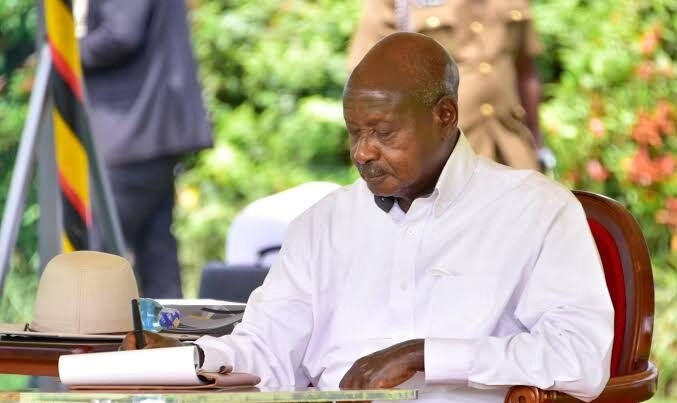
In a move that has sparked significant controversy, President Yoweri Museveni of Uganda has signed the Uganda People’s Defence Forces (UPDF) Amendment Bill into law. This legislation, which permits military tribunals to prosecute civilians, has faced widespread criticism from opposition leaders and human rights organizations. Critics argue that the law undermines democratic principles and violates constitutional protection
The UPDF Amendment Bill was introduced following a Supreme Court ruling in January 2025 that barred military courts from trying civilians. The court had deemed such trials unconstitutional, citing concerns over the competence and fairness of military tribunals. In response, the National Resistance Movement (NRM) parliamentary caucus, led by President Museveni, resolved to withdraw the original bill and instructed the Attorney General to draft a revised version that would comply with the court’s ruling .
Despite the withdrawal and subsequent revisions, the new legislation reintroduces provisions allowing military courts to try civilians under certain circumstances. The law has been defended by the military, which argues that it is necessary to combat armed criminality and political militancy effectively
Opposition leaders have vehemently opposed the new law. They contend that it violates the Supreme Court’s directive and poses a threat to civil liberties. Human rights organizations, such as Human Rights Watch, have also expressed concern, highlighting the potential for abuse and the erosion of judicial independence .
Notably, high-profile opposition figures like Kizza Besigye and Bobi Wine have previously faced charges in military courts, raising fears that the new law could be used to target political dissent .
The enactment of the UPDF Amendment Bill into law is seen by many as a consolidation of power by the ruling government. It raises questions about the independence of the judiciary and the protection of civil rights in Uganda. As the country approaches the 2026 elections, the law’s impact on political freedoms and the treatment of opposition figures will be closely scrutinize
President Museveni’s decision to sign the UPDF Amendment Bill into law, despite widespread opposition, marks a significant development in Uganda’s legal and political landscape. The law’s implications for civil liberties and judicial independence will likely remain a contentious issue in the lead-up to the 2026 election